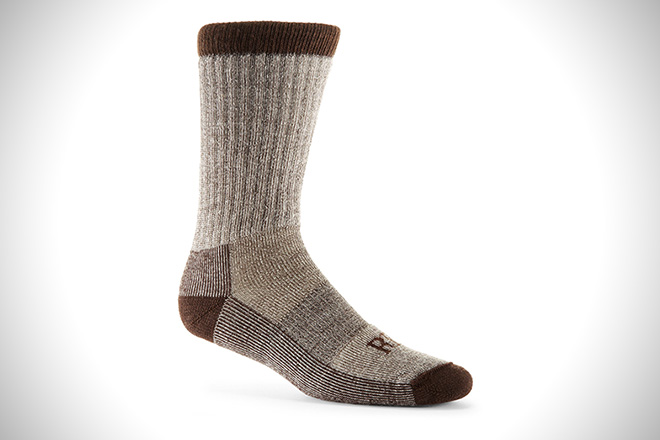
Wool socks are one of the rare outdoor upgrades that can make an ordinary day more comfortable. A good merino blend manages sweat better than a basic cotton athletic sock, resists odor longer between washes, cushions the foot where it rubs, and still fits properly inside the shoe. The right pair can work for hiking, travel, work boots, winter walks, and daily wear. The wrong pair can make a good shoe feel cramped, hot, or slippery.
Do not shop for “warmest wool sock” by default. Sock thickness changes shoe fit, which changes friction. A heavy-cushion sock inside a close-fitting running shoe can create the very hot spots you hoped it would prevent. A thin liner inside a loose boot can feel perfect on a warm hike but inadequate in snow. Start with the footwear you already own, the conditions you actually face, and the amount of walking you do.
We compared current merino-blend socks by cushion level, height, material blend, reinforcement, toe construction, intended footwear, care instructions, and value. We focused on wool blends rather than 100% wool because nylon and stretch fibers often provide the durability and fit retention that a hard-wearing sock needs. Prices and colors change, so use the Amazon links to confirm your exact size and current availability.
Our picks at a glance
Best wool socks for hiking and all-day boots: Darn Tough Hiker Micro Crew Cushion
Check Darn Tough Hiker Micro Crew Cushion socks on Amazon
The Darn Tough Hiker Micro Crew Cushion is the premium default for hikers, travelers, and people who spend long days in hiking shoes or boots. The 1466 model is a midweight micro-crew sock with soft terry loops underfoot and targeted cushioning over the ankle and Achilles. Darn Tough describes its performance fit as designed to avoid slipping and bunching, uses a smooth True Seamless toe construction, makes the socks in Vermont, and backs them with an unconditional lifetime guarantee.
The height is useful with low hiking shoes and standard boots: Darn Tough says the cuff averages about 8.5 inches from heel to cuff and appears roughly six inches above a low hiking shoe. That gives protection from shoe collars, debris, and boot abrasion without extending all the way to a tall traditional crew. The midweight cushion is enough for long miles and boot use, but it is not the best choice for tight dress shoes, very warm city walking, or anyone who prefers a minimal feel underfoot.
Choose the Hiker Micro Crew Cushion if you regularly hike, travel with walking shoes, work outdoors, or want one durable pair that earns a higher price through repeat use. The warranty is valuable, but it should not be the only reason to buy a sock that does not fit. Choose the size by the manufacturer’s chart, wear it with the shoes you plan to use, and confirm that the toe is not compressed or bunching at the heel.
Best light-cushion wool socks for mixed hiking and daily wear: Smartwool Hike Light Cushion Crew
Check Smartwool Hike Light Cushion Crew socks on Amazon
The Smartwool Hike Light Cushion Crew is the better choice when you want a breathable, less bulky hiking sock that can also work for daily walking and travel. Smartwool uses light cushioning along the entire bottom of the foot rather than a thicker all-over build. The current version is made with 58% merino wool, 40% nylon, and 2% elastane, and includes its Indestructawool durability zones, 4 Degree Elite Fit System with stretch and mesh zones, and a virtually seamless toe.
That blend explains why a good wool sock is not pure wool. Merino contributes comfort, odor resistance, and moisture management; nylon reinforces high-wear areas; elastane helps the sock return to shape. A 58% merino blend is not “less real” than a 79% wool heavy sock—it is designed for a different balance of warmth, drying, durability, and fit.
Choose the Smartwool light cushion crew for warm-weather hiking, walking-heavy trips, trail sneakers, and boots that already have limited room. The light cushion works under a full sole without consuming as much shoe volume as a full-cushion sock. If you are hiking in deep cold, wearing rigid boots, or regularly feel pressure at the heel and ankle, step up to a midweight or expedition build instead of trying to make a light sock do a heavy sock’s job.
Best warm wool socks for cold hiking and winter boots: REI Co-op Merino Wool Expedition Hiking Crew
Check REI Co-op Merino Wool Expedition Hiking Crew socks on Amazon
The REI Co-op Merino Wool Expedition Hiking Crew is the right format for cold conditions, roomy winter boots, and hikers who know they want substantial underfoot cushioning. REI lists a heavy-cushion crew construction made from 79% merino wool, 20% nylon, and 1% Lycra spandex. It includes reinforcement at the heel, toe, footbed, and Achilles, an arch band, and seamless toes. The brand’s care guidance is practical: wash on cold or warm, skip bleach and fabric softener, and tumble dry on low.
Heavy cushioning has a purpose: it increases insulation, protects against boot hardware and hard trails, and makes a long day in a stiff winter boot less punishing. But it takes up space. If you are currently fitted for boots wearing thin cotton socks, do not add an expedition pair before checking fit. Your toes need room to move, your heel needs to stay seated, and your circulation should not be compromised by an overstuffed shoe.
Choose this style for snow hiking, cold-weather camping, winter work boots, and anyone who naturally runs cold in their feet. Do not use it as a default summer sock. In warm weather, excess warmth and bulk can lead to sweat and friction. Carry a spare dry pair on a wet or cold trip; no sock remains comfortable indefinitely once it is saturated.
How to choose wool socks
Choose cushioning for the shoe, not the weather label
Ultralight or liner socks have minimal bulk and work well in close-fitting trail runners, dressier shoes, warm weather, or as a base layer beneath a thicker hiking sock. They are not the automatic answer for every blister-prone foot; two layers can increase bulk and friction if the system is not fitted properly.
Light cushioning adds comfort along the footbed while remaining versatile for walking shoes, trail sneakers, and many everyday boots. Smartwool’s Hike Light Cushion Crew is the sweet spot for people who want one pair to cover travel and modest hikes.
Midweight cushioning is a reliable hiking and work-boot category. It offers more insulation and protection without becoming as bulky as a true winter sock. Darn Tough’s Hiker Micro Crew Cushion belongs here. It is often the safest choice for a standard hiking boot.
Heavy or expedition cushioning is for cold, rigid boots, snowy conditions, and people who know their footwear has room for it. It is not simply “better.” A thick sock in an already snug shoe can crowd the toes, reduce circulation, and create rubbing at the heel.
Pick the right height
No-show and ankle socks work in low-cut shoes but can leave the ankle exposed to shoe collars and debris. Quarter and micro-crew socks offer a useful compromise for trail shoes and shorter boots. Crew socks are the versatile outdoor height, protecting the lower leg from boot rub and brush. Over-the-calf socks are useful for tall boots, snow sports, and specific workwear, but they can feel too warm for daily walking.
Match the sock height to the tallest contact point of your shoe. A low-cut running shoe does not need a knee-high sock. A hiking boot with a stiff collar deserves enough cuff height that the collar never rubs bare skin. The sock should stay up without creating a deep constricting line around the calf.
Understand wool blends
Merino wool is valued because its fine fibers can feel softer than traditional coarse wool, and it manages moisture and odor well in active use. It is not magic. If your shoe is unbreathable or your foot is soaked by rain, the sock has limited ability to make the situation comfortable. The main advantage is that a merino blend can remain less clammy and less odorous than cotton during a long day, while keeping a usable amount of insulation.
Nylon is commonly added for durability, especially in the heel and toe. Elastane, Lycra, or spandex helps the sock maintain a close fit and recover after washing. A blend is often the more durable and functional choice for hiking. Do not judge only by the wool percentage. Look for reinforced high-wear zones, a supportive arch, a toe seam you tolerate, and a fit that stays in place.
Choose wool socks by activity
For hiking
Start with a light or midweight crew depending on the boot. The Darn Tough Hiker Micro Crew Cushion works well with standard hiking shoes and boots when you want moderate protection. The Smartwool Hike Light Cushion Crew makes more sense with trail runners, warm conditions, or a boot with limited interior space. Test socks on a shorter hike before a multi-day trip; a sock that feels good while standing can reveal a pressure point after ten miles.
Bring at least one dry spare pair on wet-weather or multi-day trips. Change socks when they are soaked or when hot spots begin, not only at the end of the day. Air shoes and socks whenever you stop. If you develop a blister, address it promptly with appropriate first-aid care and reconsider the shoe, sock, lacing, and moisture combination that caused it.
For travel and everyday walking
Choose a light-cushion crew or micro crew. Merino blends are useful on trips because they are comfortable through airport walking, long days on foot, and limited laundry access. The goal is not to avoid washing socks indefinitely; it is to have a pair that stays comfortable and less odorous during a normal travel day. Pack enough pairs for hygiene and weather, then use a small sink wash or local laundry service when needed.
Pair them with comfortable walking shoes and a bag that keeps dry items dry. Our travel duffel bag guide can help when you need a simple place to separate worn socks from clean clothes. Avoid stuffing damp socks into an airtight compartment for days, where odor and mildew are more likely to develop.
For work boots
Choose sock thickness based on how the boots fit. A midweight cushion works well for many leather or composite-toe boots. For cold outdoor shifts and roomy insulated boots, an expedition sock may be appropriate. In hot work environments, do not assume thicker is safer; a light merino blend can be more comfortable if the boot already traps heat.
Inspect the sock and boot together. If the heel slides, the toe seam rubs, or the sock bunches under the arch, change the combination. A sock cannot compensate for a boot that is too small, too large, or broken down at the heel counter.
For winter and snow sports
Use a ski- or snowboard-specific sock in boots designed for those sports, where padding zones and height are tailored for a shell boot. Do not put a thick hiking sock inside an already snug ski boot just for extra warmth; this can reduce space, impair control, and create pressure points. For winter hiking and snowshoeing in roomy boots, a heavy merino blend such as the REI Expedition Hiking Crew is more appropriate.
Fit and blister prevention
Size socks by foot, not wishful thinking
Use the maker’s size chart and choose the size that corresponds to your actual foot or shoe size. Socks that are too small can pull tight at the toes, compress the forefoot, and wear out faster. Socks that are too large can bunch, fold, and rub. Smartwool’s current unisex chart spans specific men’s and women’s shoe-size ranges; Darn Tough offers its own chart. Do not assume a “medium” fits the same across brands.
Put the sock on fully before putting on the shoe. Smooth the toe, align the heel pocket with your heel, and pull the cuff up gently. Then lace the shoe in the way you will wear it on a real walk. Take a few minutes to walk stairs or a block before removing tags and committing to a multi-pair order.
Socks help, but they do not guarantee no blisters
Blisters are caused by a mix of friction, heat, moisture, pressure, and movement. A well-fitting merino sock can reduce some of those factors, but it cannot make an ill-fitting shoe safe. New footwear, downhill walking, wet conditions, and long distances increase the risk. Trim nails, break in footwear gradually, adjust lacing, keep feet dry where possible, and stop to deal with hot spots before they become open blisters.
If you have diabetes, poor circulation, neuropathy, or a foot wound, get individualized advice from a qualified clinician before relying on any sock, insole, or hiking adjustment. Gear guidance is not medical care.
Washing and care
Wash more gently than cotton gym socks
Turn wool socks inside out, wash on cold or warm gentle cycle with a mild detergent, and avoid bleach and fabric softener. Smartwool recommends a gentle warm or cool wash and low tumble dry for its Hike Light Cushion Crew. REI’s wool-sock care guidance similarly says no bleach or fabric softener and low tumble dry. Follow the instructions for the exact pair, because blends and finishes can vary.
Fabric softener can coat fibers and reduce the moisture-management properties that make a wool blend useful. High heat can damage elastic and contribute to shrinkage. If you want the longest life, air dry when practical. If you tumble dry, choose low heat and remove them promptly.
Rotate more than one pair
Even a durable sock needs time to dry and recover. Rotate several pairs if you walk, hike, or work in boots regularly. This reduces wear, gives you a clean dry option, and makes it easier to notice when one pair is thinning at the heel or losing elasticity. A lifetime warranty does not mean you should ignore normal wear; clean socks and a fit check are still routine maintenance.
Common mistakes to avoid
- Buying the thickest sock for every activity. Cushion must match the shoe volume and conditions.
- Expecting 100% wool to be the most durable hiking option. Nylon and stretch fibers are often there for useful reasons.
- Choosing a sock by price alone. Fit, heel hold, toe seam, and cushion placement determine comfort.
- Wearing heavy hiking socks in tight ski or running shoes. Extra bulk can create pressure points and friction.
- Ignoring wet socks on a long trip. Carry dry spares and change before discomfort becomes a skin issue.
- Using fabric softener or high heat. It can compromise the fibers and elastic fit.
- Assuming socks alone prevent blisters. Shoe fit, lacing, moisture, and distance are equally important.
How we chose
We compared current merino-blend socks across three common needs: an all-day midweight hiking sock, a lighter low-bulk crew for mixed walking and hiking, and a heavy-cushion cold-weather option. We looked at cushion level, cuff height, wool/nylon/stretch blends, reinforcement, toe construction, fit systems, care requirements, footwear pairing, and price. We did not treat “more wool” or “more cushion” as universally better.
This is product research, not a claim that one sock will fit every foot or prevent every blister. Materials, colors, sizes, and stock can change. Confirm the current product page and try a new sock with your actual footwear before using it for a long trip. SuperGrail links to Amazon for shopping and may earn a commission from qualifying purchases. That does not change how we explain the trade-offs.
Wool-sock FAQ
Are wool socks good in summer?
Yes, a light merino blend can be comfortable in warm conditions because it manages sweat and offers less bulk than a heavy winter sock. Choose light cushioning, a suitable height, and breathable footwear. Do not use an expedition sock in hot weather unless your conditions and boot fit truly require it.
Should wool socks be 100% wool?
Not for most active use. Nylon reinforces high-wear zones and stretch fibers help the sock stay in place. A merino blend can be more durable and better fitting than a pure-wool sock. Choose the blend and construction that fit your use, not the highest wool percentage on the label.
How many pairs of wool socks do I need for hiking?
Bring at least one dry spare pair for wet weather or a long day, and enough clean pairs for the length of the trip and your washing plan. Rotate pairs so socks can dry. The exact number depends on weather, distance, footwear, and laundry access.
Why do my wool socks feel itchy?
Fiber diameter, skin sensitivity, finishing, fit, and humidity can all affect how a sock feels. Merino is often softer than traditional coarse wool, but no material suits everyone. Try a different blend, cushion level, or brand, and return the pair if it is uncomfortable before use if the retailer allows it.
Can wool socks prevent blisters?
They can help manage moisture and friction, but they cannot guarantee blister prevention. Proper shoe fit, lacing, dry socks, nail care, gradual break-in, and addressing hot spots early are all essential.
Our approach: We explain the trade-offs behind every recommendation. If you buy through an Amazon link, SuperGrail may earn a commission—our research remains independent.