A portable volleyball net fails in familiar ways: the poles bend, the top tape sags, the boundary becomes a knot in the grass, or one hard serve pulls a guyline loose. The fix is not buying the most expensive set by default. It is choosing a system that matches the surface, the strength of the players, and how often it will be assembled.
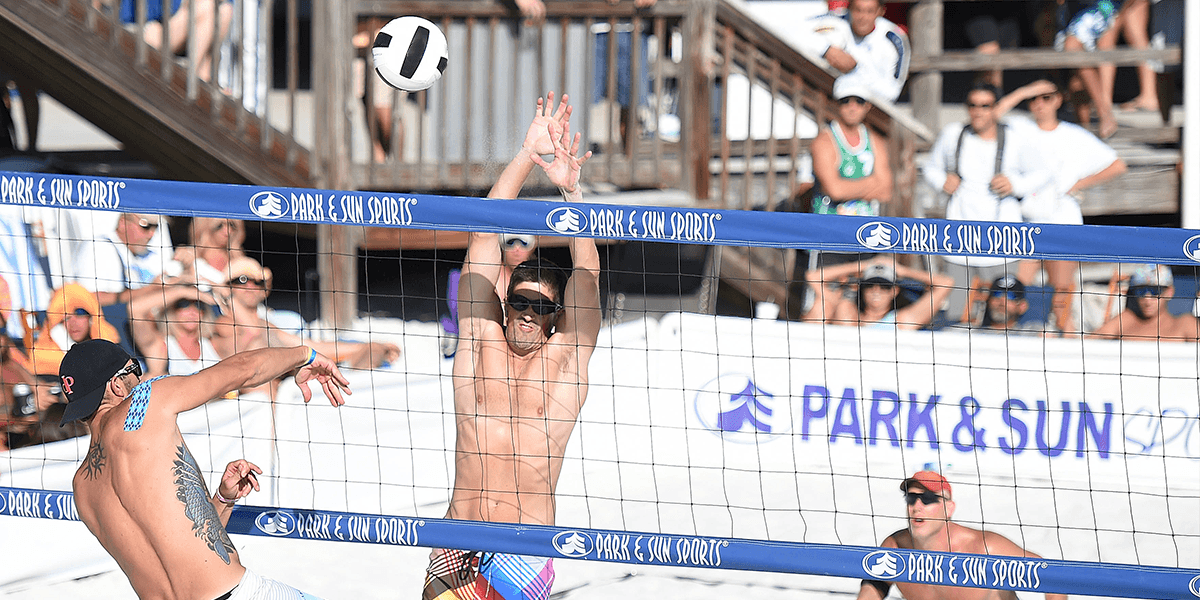
For regular grass play, league-style backyard games, or a group that wants a real court, buy the Park & Sun Sports Spectrum Classic. Its two-inch telescoping aluminum poles, sleeve net, pull-down guylines, ground stakes, and 30-by-60-foot boundary make it a proper outdoor system rather than a party accessory. The Baden Champions Volleyball Set is the better fit for a family or smaller group that still wants a regulation-size net and court line in one bag. The Franklin Sports Starter Volleyball Set is for a casual picnic or younger kids, not organized adult volleyball. If you already have fixed standards, skip portable systems entirely and get the Tandem Sport 39-inch Heavy Duty Competition Net instead.
Those recommendations look different because the jobs are different. A serious grass setup needs taut net tension and reliable ground anchoring. A family set needs to be easy to unpack and forgiving of a short game. A facility with installed poles needs a durable replacement net, not another bag of portable parts.
Our picks at a glance
| For | Pick | Why it fits | Skip it if |
|---|---|---|---|
| Regular grass, park, or beach use | Park & Sun Sports Spectrum Classic | Adjustable two-inch aluminum poles, a 32-foot sleeve net, proper guylines, stakes, and a full court boundary. | You only need a lightweight game for occasional kids’ gatherings. |
| Backyard groups that want a complete step up | Baden Champions Volleyball Set | Includes a regulation-size net, steel poles, a ball, pump, guylines, stakes, boundary, and carry bag. | You need the rigidity and long-term serviceability of the Park & Sun system. |
| Picnics, young kids, and a low-stakes first set | Franklin Sports Starter Volleyball Set | A compact 20-foot net, lightweight poles, ball, pump, stakes, and ropes in one simple package. | Adults will serve or hit with real pace. |
| Existing permanent or semi-permanent standards | Tandem Sport 39-inch Heavy Duty Competition Net | A 32-foot, 39-inch net with vinyl edging, cable top, tension hardware, and competition dimensions. | You need poles, anchors, boundary lines, or a portable kit. |
Best all-around outdoor system: Park & Sun Sports Spectrum Classic
The Park & Sun Sports Spectrum Classic is the right starting point for people who actually plan to play volleyball outdoors on a regular basis. Its foundation is much stronger than the familiar thin-tube party sets: two-inch powder-coated aluminum poles telescope to the common men’s, women’s, and coed heights, then lock with push buttons. That gives the system a better chance of staying at the intended height after a run of serves and swings.
The included 32-foot-by-three-foot sleeve net is pre-attached to the poles. The sleeves, reinforced corners, and three-inch top and bottom tapes are there to distribute tension more evenly, which matters when the ball hits high on the net. Park & Sun also includes 5/16-inch pull-down guylines with padded handles, four 12-inch steel stakes, and a pre-measured 30-by-60-foot rope boundary. In other words, you get the parts needed to create a recognizable court, not merely two poles and a strip of mesh.
Choose the Spectrum Classic for a dedicated backyard court, adult grass games, park sessions, and community events where setup quality changes how the game feels. It is portable, with the full system fitting into a heavy-duty bag, but it is still a real kit. Expect to spend time placing stakes, checking tension, and winding the boundary back up. That work is the trade-off for a net that remains useful when play gets more serious.
For beach use, add anchoring equipment made for sand. A grass stake relies on compact soil; it is not a dependable sand anchor. The Spectrum Classic can be configured for beach setup with the maker’s sand-adapter hardware, but buy that purposefully and learn the setup before taking it to a busy public beach. A loose guyline is both a bad net system and a hazard to people walking through the area.
Best complete step-up set: Baden Champions Volleyball Set
The Baden Champions Volleyball Set makes sense for buyers who want more structure than a casual toy set without moving all the way to a higher-end tournament-style system. It bundles a regulation-size net, a Baden Match Point volleyball, a pump and needle, heavy-duty steel poles, guylines with tension handles, 10-inch stakes, a 30-by-60-foot weather-resistant boundary, and a carry bag. That list solves the annoying part of buying a first outdoor set: discovering after delivery that the net is there but the court, ball, or pump is not.
The set is a practical fit for a family with older children, a neighborhood group, or a host who wants a proper court for weekend games. The included boundary makes a big difference. Without a visible court, every close ball turns into a discussion, and serves tend to drift farther away from useful practice. Use the line even when the rules are relaxed. It gives players a shared reference and stops the court from silently expanding into the yard.
Its compromise is pole material and overall serviceability. Steel poles can be perfectly adequate for normal backyard play, yet they are not the same as the Spectrum Classic’s heavier-duty aluminum architecture and tension arrangement. If you are running frequent adult games, teaching attackers to swing with pace, or leaving the system up for long periods, the Park & Sun is the better investment. The Baden is the reasonable answer when complete accessories and a lower entry point are more important than the last degree of rigidity.
Best simple backyard net: Franklin Sports Starter Volleyball Set
The Franklin Sports Starter Volleyball Set is for a different type of afternoon. Its one-inch poly poles rise to eight feet, and its net measures 20 feet long by 1½ feet high. The package includes a PVC ball, pump, ropes, and six ground stakes. It is light, simple, and easy to carry to a cookout, school field day, or beach day.
Those dimensions are the reason to buy it or avoid it. A 20-foot, 1½-foot net is a compact recreational game, not a regulation volleyball court. That is good news for a group of younger kids, adults who have not played before, or a small yard where a full court would be absurd. The lower consequences of a soft PVC ball and short net can make the first few rallies less intimidating.
It is not the right set for adult hitters, formal practice, or anyone who expects a taut regulation-height net. Strong contact and high wind are more than this lightweight system is meant to manage. Buy it as a portable activity, set it up with sensible spacing around the ropes, and pack it away after use. A buyer who knows that boundary will enjoy it more than someone hoping it can become a club court.
Best net for existing standards: Tandem Sport 39-inch Heavy Duty Competition Net
If your gym, school, club, or outdoor court already has compatible fixed standards, you do not need another portable system. You need a net built to work with the hardware you own. The Tandem Sport 39-inch Heavy Duty Competition Net is the appropriate category of purchase.
The cable-top version measures 39 inches by 32 feet and has 18-ounce white vinyl along the top, bottom, and sides. It includes a Kevlar bottom rope, a net tightener, three end ties on each side, and wood doweling. The manufacturer lists it as official size for collegiate, high-school, and USA Volleyball play, and notes that it fits most systems. That last phrase still deserves a careful compatibility check. “Most” is not every system, and replacing a net is much easier than returning a net stretched onto incompatible hardware.
Measure your existing standards, identify whether the top cable and bottom rope arrangement suit your tension hardware, and look at the condition of the winch, padding, and anchors before ordering. A premium replacement net cannot make damaged standards safe. It also does not include poles, a court boundary, or portable ground anchors, so it is not a shortcut for a backyard buyer. It belongs on a court that already has the right support structure.
Surface and anchoring decide the right system
Grass, sand, and a permanent court use different anchoring logic. On grass, long steel stakes and properly tensioned guylines can create a stable, portable system. Stake locations need clear space around them, and lines should be visible so nobody runs through them. Never place guylines across a walkway or where a player will chase a ball.
Sand needs larger anchors made for sand. Standard lawn stakes pull out easily because sand does not compact around them in the same way. A beach setup should have appropriate sand augers or sandbags, enough time to set each anchor correctly, and a plan for wind. Use the manufacturer’s recommended beach adapter and inspect every connection before play. When the wind rises enough to make the poles sway or the net lose tension repeatedly, take the system down.
Indoor and permanent outdoor courts are a separate category. They use anchored or weighted standards, a tension mechanism, and protective padding. Portable sets should not be improvised into an indoor court with chairs, patio furniture, or random weights. The loads and trip hazards are wrong, and a falling pole is not a harmless inconvenience.
Read the pole and tension details before ordering
A product photo can hide the difference between a quick backyard toy and an outdoor system that can carry a real rally. Look for the pole diameter and material, the way each section locks, the type of guyline, and the included stakes. Larger aluminum poles with a positive locking mechanism are a better fit for repeated adult play than lightweight plastic tubes or thin steel poles. They still need anchors, but they begin with less flex.
Pay attention to how the top of the net is tensioned. A sleeve that distributes tension across both poles and adjustable pull-down guylines generally gives a more even net than tying random knots to a thin top cord. The goal is not an impossibly tight net. It is a level, stable net that does not sag after a few serves. For portable systems, spare stakes, a small mallet, and a way to clear sand or dirt from the pole joints are useful ownership items, even if they do not appear in a glossy product photo.
Get the height and court size right
Outdoor sets should adjust to the version of volleyball you intend to play. The Spectrum Classic has preset adjustment for common men’s eight-foot, women’s seven-foot-four-inch, and coed seven-foot-eight-inch heights. Use the relevant league rule if you play in an organized event; age group, association, and format can change the requirement. For casual play, choose a height that lets the group rally and attack with good form instead of treating an adult height as a badge of honor.
A regulation-width outdoor net is 32 feet long. That does not mean every gathering needs a full-size court. A short backyard net can be the better option for younger players or a tight space. The mistake is buying a compact system and then expecting it to support the footwork, attack angles, and court awareness of full volleyball. Be honest about the game you want to play.
Boundary lines matter once players care about keeping score. The Park & Sun and Baden systems include a 30-by-60-foot boundary, which is a useful practical setup for casual outdoor play. Formal beach, grass, and indoor events can use different court dimensions and line rules, so event organizers should set the exact court. For a backyard group, a visible, consistently placed line is more valuable than guessing at precision with no line at all.
Setup habits that protect the net and the players
Set the poles first, then attach and tension the net in small adjustments. Do not yank one guyline tight while the other side is loose. Work around the system so the poles stay upright and the top tape remains level. Check the net height at the center after tensioning; it can change as the lines settle.
Keep the telescoping sections clean. Sand and dirt inside a pole are a common cause of sticking and poor adjustment. Wipe poles before packing them away, dry the net and boundary line fully, and store the bag out of prolonged heat and moisture. Rope and webbing last longer when they are not left tangled and wet after every game.
Take down portable systems after the session unless the manufacturer specifically supports extended outdoor installation and the site is secure. Sun, wind, rain, lawn equipment, and unattended kids do more damage to a net over a season than normal volleyball ever will. A portable system is designed to travel and be stored; treat that as part of ownership.
Build the rest of the setup around the net
A net is only one part of a good game. Use a surface-specific ball at the correct pressure, especially outdoors where beach, grass, and indoor balls do not play alike. Our guide to volleyballs explains what changes between those choices. A pump with a low-pressure-capable gauge, a small first-aid kit, water, and a visible boundary are more useful additions than decorative accessories.
For a team or regular training group, pair the net with a practice plan and equipment that keeps drills moving. A ball cart and a clear target can save more time than another novelty attachment. Our guide to volleyball training equipment covers the pieces that earn their place in a serious practice.
Questions before buying a volleyball net
Can a portable volleyball net stay outside all summer?
Only if the manufacturer explicitly supports that use and you can keep the system protected. Most portable sets last longer when they are dismantled after play. Weather and lawn equipment are hard on ropes, poles, mesh, and stakes.
Can I use a grass net on the beach?
Some systems can work on both surfaces, but grass stakes are not a safe beach anchor. Use a compatible sand-anchor kit and follow the setup guidance for that exact net. A portable net that is stable on a lawn can be loose in sand.
What makes a portable net sag?
Loose guylines, an under-tensioned top line, poles that are not vertical, stretched mesh, or ground anchors that have shifted can all cause sag. Reset the system evenly and inspect the hardware before assuming the net itself is defective.
Do I need a boundary line?
For any game that keeps score, yes. A boundary makes calls clear and helps players learn to control serves and attacks. A rope boundary is enough for casual grass play; organized events may have their own line requirement.
Choose the system that fits the game
Buy the Park & Sun Spectrum Classic for regular grass play, serious backyard groups, and beach sessions with the proper sand anchors. Choose the Baden Champions set when you want a complete regulation-size backyard package without committing to a heavier-duty system. The Franklin Starter set is a good family activity, not a substitute for an adult court. If permanent standards are already in place, purchase a competition net that matches them and spend the time on compatibility and safe tensioning. A stable, well-anchored net gives every player a better chance to enjoy the game.