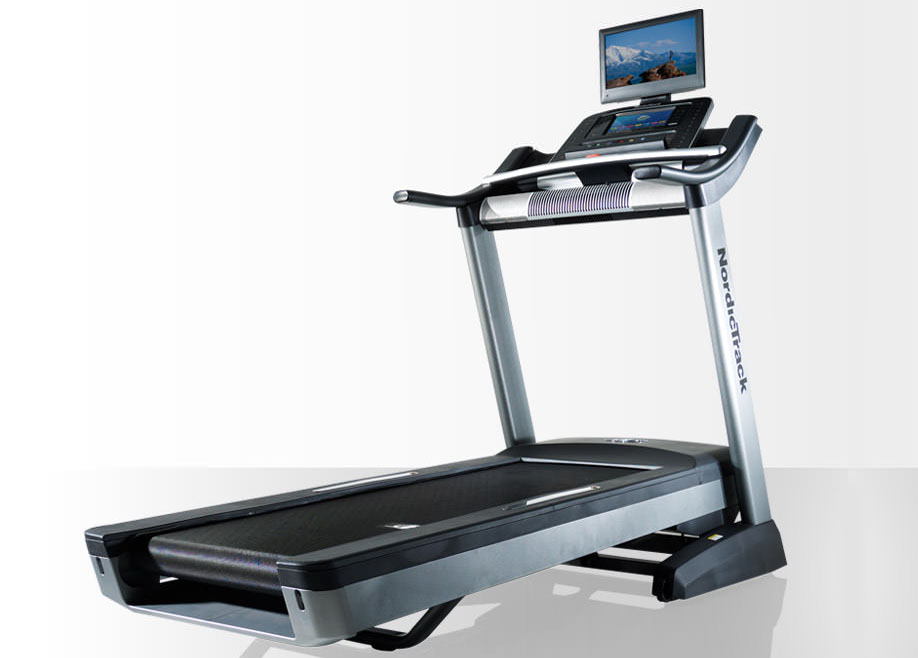
Our pick for most homes: a folding treadmill with a full-length deck, simple manual controls, and a service plan you can actually use beats a bargain machine with a giant screen. For regular walking and running, we would start with the Horizon 7.0 AT. It has the dimensions and controls most people need without making a subscription the center of the purchase. For a more immersive training setup, the NordicTrack Commercial 1750 is the better fit. For buyers who value a heavier frame, a wider deck, and a simpler ownership model, the SOLE F85 is the upgrade choice.
This is a research-led buying guide. We compared current manufacturer specifications, manuals, warranty terms, delivery requirements, safety notices, and retail availability. We did not conduct a controlled, hands-on durability test of every machine here, so we do not present this as one. Treadmill models, consoles, subscriptions, prices, and delivery options change often; confirm the exact model number and current terms before ordering.
The short version
- Best value for regular walking and running: Horizon 7.0 AT. A 20-by-60-inch deck, 0 to 15% incline, fold-up frame, physical speed and incline dials, and no mandatory built-in screen make it a sensible choice for households that want a real treadmill rather than a tablet on legs.
- Best for guided training: NordicTrack Commercial 1750. Its large touchscreen, decline capability, roomy 22-by-60-inch belt, and iFIT-oriented experience suit a buyer who wants coached sessions and accepts the cost and complexity that come with connected fitness.
- Best upgrade for a serious home gym: SOLE F85. The 22-by-60-inch deck, 350-pound stated user capacity, 3.5 HP motor, 15.6-inch touchscreen, and lifetime frame-and-motor warranty make a persuasive case for someone prioritizing substantial hardware over a class subscription.
A treadmill is one of the few home-fitness purchases where the delivery route, floor plan, and repair process matter as much as the feature list. The best model is not necessarily the one with the highest horsepower number or the most dramatic marketing video. It is the machine that fits your gait, your room, your routine, and your tolerance for subscriptions and maintenance. A two-person household that walks at lunch and jogs a few miles after work has very different needs from a runner doing intervals five days a week. Start there, not with a sale badge.
How to choose a treadmill without buying the wrong machine
First, separate walking from running. A compact walking pad can be useful under a desk or in a small apartment, but it is not a substitute for a running treadmill. It usually has a shorter, narrower belt, a lower top speed, less substantial hand support, and no practical way to handle a full running stride. If you plan to run at all, a 60-inch deck length is a much safer starting point for most adults. Width matters too: 20 inches is workable, while 22 inches feels less restrictive during easy running, intervals, and tired-foot placement late in a workout.
Next, measure the entire path from the curb to the room. Do not measure only the open floor space. Check door openings, stair turns, elevator dimensions, ceiling height, and the place where the folded deck will stand. A folding treadmill still occupies a serious amount of space when open. It also becomes a tall, heavy object when folded, which can matter in a low-ceiling basement or a room shared with children. The machine's shipping carton may be much larger than the assembled footprint, so white-glove delivery is often worth considering when a large box has to make a difficult turn.
Then decide whether you are buying hardware or an ecosystem. A connected treadmill can be motivating if you genuinely use trainer-led classes, automatic terrain changes, or on-screen routes. But a screen is another computer to maintain, and the most compelling software features may depend on an ongoing membership. A straightforward console plus a tablet shelf is less glamorous, yet it gives you freedom to use the apps, music, TV, or training plan you already prefer. Neither route is automatically better. The mistake is paying for a subscription-oriented machine when you mostly want to press Start, set a pace, and run.
Finally, read the warranty as a map of the ownership experience, not a trophy. A lifetime frame warranty is encouraging, but it does not tell you who installs a replacement part, how long labor is covered, or whether service is available where you live. Look separately at frame, motor, deck, parts, electronics, and labor. Save the assembly documents and proof of purchase. If a company offers delivery-and-assembly tiers, compare them before checkout rather than after a 300-pound carton arrives at the curb.
What we looked for
- A deck that matches the intended workout: for running, we favor a 60-inch running surface. A 20-inch width is the baseline; 22 inches is welcome if the budget and room allow.
- Usable controls: direct speed and incline controls are much easier to use mid-interval than a touchscreen menu. A clear emergency stop and a safety key are non-negotiable.
- Room and delivery reality: assembled size, folded size, machine weight, step-up height, shipping weight, and delivery options all affect whether a treadmill works at home.
- Ownership beyond the first week: warranty coverage, access to parts, required subscriptions, and support documentation matter more than a preloaded workout count.
- Honest price tiers: we compare an attainable full-size model, a connected-training step-up, and a heavier upgrade instead of pretending one machine suits every budget.
- Safety and fit: stated user capacity, handrails, deck height, electrical requirements, and the ability to set the pace before you begin deserve more attention than entertainment features.
Best value for most people: Horizon 7.0 AT
Who it is for: walkers, joggers, and recreational runners who want a full-size folding treadmill without committing to a proprietary screen or a required fitness membership.
The Horizon 7.0 AT is the most balanced place to begin because its core hardware lines up with what a general household actually needs. Its 20-by-60-inch running area gives a runner room to settle into a stride, while the 0 to 15% incline range lets walkers build a challenging hill session without chasing speed. Horizon lists a 0.5 to 12 mph speed range, a 325-pound stated user capacity, an 8⅝-inch step-up height, and a folding frame. Those are not exotic numbers, but they are the practical ones. It also uses a 1.6 mm belt and 3-Zone Variable Response Cushioning, details worth knowing because belt feel and deck support are part of the day-to-day experience.
The distinguishing feature is the control layout. The speed and incline QuickDial controls are a good match for intervals: you can make a meaningful adjustment without hunting through a touchscreen. That may sound minor on a product page; it matters once you are moving. The console is intentionally modest—a high-contrast LCD and LED windows rather than a large built-in display—but it supports Bluetooth fitness connections and includes a tablet rack. That makes the 7.0 AT a strong choice for someone who already uses a phone, tablet, watch, or third-party training app.
It is not a small machine. Horizon lists it at 76 by 35 by 67 inches assembled and 277 pounds, with an estimated shipping weight of 332 pounds. Plan the room before it arrives, place it on a stable surface, and give yourself safe clearance behind the belt. The deck is 20 inches wide rather than 22, so a larger runner who wants an especially open feel may prefer a heavier upgrade. It is also a better choice for someone comfortable bringing their own screen than for a buyer who wants the console to deliver a complete studio-class experience.
Check the Horizon 7.0 AT on Amazon.
Best connected-training upgrade: NordicTrack Commercial 1750
Who it is for: a household that wants guided workouts to be part of the purchase and has enough space, budget, and patience for a connected treadmill.
The Commercial 1750 makes sense when the display and training software are genuinely useful to you. The current model is built around a pivoting 16-inch touchscreen and iFIT programming, with Bluetooth connectivity for headphones and heart-rate hardware. Its running belt is 22 by 60 inches, and its stated speed range reaches 12 mph. NordicTrack also specifies incline to 12% and decline to -3%, which is a meaningful distinction for anyone who wants more varied terrain without manually improvising every workout.
That package is better understood as a connected-fitness purchase, not just a treadmill purchase. The large screen, automatic workout adjustments, and trainer-led catalog can remove friction for people who thrive on direction. The pivoting display is useful if you intend to follow floor work away from the belt. But the same strengths create a dependency: before you buy, find out exactly what works in manual mode, which features require a paid membership, what the membership costs after any introductory period, and how the console behaves if your Wi-Fi is unavailable. Do not leave those questions for delivery day.
It is also a substantial object. The published assembled dimensions are roughly 77.3 by 37 by 59.5 inches, and the listed maximum user weight is 400 pounds for the version currently shown by NordicTrack. Model revisions can change details, so verify the page, manual, and model number attached to the unit you are about to order. For a runner who wants a wide deck and a polished guided-training environment, the 1750 is compelling. For someone who dislikes subscriptions or wants the simplest possible console, it is too much treadmill in the wrong direction.
Check the NordicTrack Commercial 1750 on Amazon.
Best heavy-duty upgrade: SOLE F85
Who it is for: the buyer who would rather put money into a wide, substantial running platform and a robust warranty than into a monthly class subscription.
The SOLE F85 is the upgrade pick for a different reason than the NordicTrack. It emphasizes the machine itself. SOLE currently lists a 22-by-60-inch deck, a 3.5 HP motor, a 0.5 to 12 mph speed range, incline to 15 levels, a 350-pound stated user capacity, and a 15.6-inch touchscreen. It folds with a release lever, has Wi-Fi and Bluetooth, and offers built-in apps, but it does not require a monthly subscription simply to run. For many buyers, that ownership model is as valuable as the extra deck width.
At roughly 243 pounds assembled, with a listed footprint around 78 by 38 by 60 inches, the F85 is not an impulse purchase for a spare bedroom. It needs a deliberate location, a suitable electrical setup, and a delivery plan. The payoff is a more planted-feeling class of machine than a light folding budget treadmill. Its current warranty separates lifetime frame and motor coverage from three-year deck, electronics, wear-item, and parts coverage, plus one year of labor. Read those distinctions carefully and ask how in-home service works in your area.
The F85 is not the automatic answer for every serious runner. It costs substantially more than a good midrange model, and its size and weight can be a nuisance if you move often. The touchscreen is useful, but it should not be the deciding feature. Buy this one if the wide deck, stated capacity, no-required-subscription approach, and warranty structure match your priorities. If your main goal is instructor-led variety, the 1750 may make better use of the same kind of budget.
A practical price ladder
Under about $800: be selective. This tier is often best for walking, light jogging, or a small-space compromise—not for a household expecting years of high-mileage running. Look for a real handrail, a clearly stated deck size, a sensible return policy, and a support path. Avoid a too-short belt simply because the headline speed looks impressive.
About $1,000 to $1,500: this is where a full-size folding treadmill starts to make sense. You should expect a 60-inch deck, useful incline, physical controls, a respectable warranty, and enough mass to feel stable. The Horizon 7.0 AT belongs in this conversation. Sale prices move around, so compare the delivered total rather than the crossed-out list price.
About $1,800 to $2,800 and up: you are paying for either a larger connected-training experience, a heavier frame and deck, or both. The NordicTrack Commercial 1750 and SOLE F85 show the two common paths. Choose the NordicTrack if guided content and decline training are valuable to you. Choose the SOLE if wide-deck hardware and fewer recurring software obligations are more appealing.
Before you order: six checks that prevent expensive regrets
- Measure headroom with the deck height included. Your running height is your own height plus the belt's step-up height. A low basement ceiling can rule out an otherwise perfect treadmill.
- Confirm the electric circuit. Use the manufacturer’s instructions. Avoid improvised extension-cord arrangements, and do not assume every outlet type is compatible with every treadmill.
- Check the shipping carton and route. The carton is the object that has to clear the door, stairs, and turn—not the tidy product photo.
- Read the exact return and labor terms. A long frame warranty does not guarantee an easy return or free in-home repair.
- Decide whether you want a subscription before buying the screen. Ask what remains available without it.
- Plan a safe location. Keep the rear of the treadmill clear, keep children and pets away while it is in use, use the safety key, and never treat the folded deck as a climbing surface.
Treadmill care that is actually worth doing
Most early treadmill problems are not dramatic failures. They are small ownership lapses: dust building up under the motor cover, a belt drifting to one side, a deck that was never lubricated as instructed, or a machine placed on an uneven surface. Follow the exact maintenance schedule in the manual rather than a generic internet calendar. Wipe sweat from the rails and console after use, keep the floor around the machine clear, and check belt tracking before it becomes a rubbing problem. If you hear a new repeated noise, smell overheating, or see a belt that stutters under normal walking, stop using the machine and contact support. Do not try to diagnose a running deck while it is moving.
A simple equipment mat can make cleanup easier and reduce cosmetic scuffing on the floor, but it does not turn an unstable floor into a suitable one. Put the treadmill where you can approach it safely, where ventilation is reasonable, and where the console is not constantly exposed to moisture or direct heat. The less elaborate your routine is, the more likely you are to keep using it.
Frequently asked questions
Is a folding treadmill good enough for running?
Yes, provided the deck, frame, user-capacity rating, and warranty fit the way you run. Folding is not the problem. A too-short deck, a light frame, or a poor service plan is. For regular running, prioritize a 60-inch belt and a machine with enough substance for your cadence and household use.
Do I need a 22-inch-wide belt?
No, but it is pleasant. A 20-inch belt is workable for many walkers and runners. A 22-inch belt offers more side-to-side forgiveness, which can be reassuring during intervals or for a larger body. Do not sacrifice deck length, warranty, or service quality solely to get two extra inches of width.
Should I buy a treadmill with a screen?
Buy one if you will honestly use the guided content and have checked the membership terms. Otherwise, a straightforward console and a stable tablet shelf can be the more durable choice. Screens age, subscriptions change, and a treadmill should still be pleasant to use when the Wi-Fi is down.
What is the right first treadmill workout?
Start slower than you think. Use the safety key, walk for several minutes, and learn where the stop control and speed buttons are before increasing pace. Build duration before intensity. A treadmill is most useful when it becomes a repeatable habit, not when the first session turns into a test of willpower.
The bottom line
For most people shopping for a true home treadmill, the Horizon 7.0 AT is the sensible first choice because it puts useful deck dimensions, incline range, physical controls, and flexible app use ahead of a costly built-in ecosystem. Step up to the NordicTrack Commercial 1750 if trainer-led content and decline training are central to your routine. Choose the SOLE F85 if you want a heavier, wider-deck machine with a subscription-light ownership model. In every case, measure the room, read the current warranty and delivery terms, and buy the treadmill that you will be comfortable using three ordinary months from now—not just the one that looks most exciting on the day it arrives.
For the rest of your training setup, see our guide to yoga mats, foam roller guide, and water bottle guide.