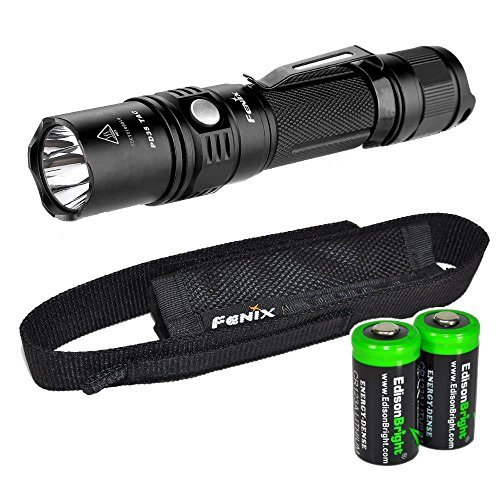
A rechargeable flashlight should be chosen for the job you actually need it to do. A small light for a dog walk needs an easy switch, a useful low setting, and a beam that makes uneven pavement visible. A light for finding a trail marker or checking a distant fence line needs throw. A light for repairing a car or reading a map needs broad, even illumination and color that does not turn every wire and label into the same gray blur.
That is why maximum lumens are a poor shortcut. The brightest setting is often a brief turbo mode, and good flashlights reduce output when heat builds up. Beam shape, sustained output, battery format, charging method, grip, and the likelihood that you will keep the light charged matter much more. A dependable 200-lumen setting you can use for hours is often more useful than a short burst of several thousand lumens.
We compared rechargeable flashlights using current manufacturer specifications for beam pattern, lower and sustained modes, battery type, charging, controls, carry options, weather protection, and size. We chose a low-cost everyday option, a long-throw outdoor option, and a premium high-color-rendering floodlight. Prices and bundle contents change; confirm the current Amazon listing, battery inclusion, and seller before buying.
Our picks at a glance
Best budget rechargeable flashlight for everyday use: Wurkkos FC11C
Check the Wurkkos FC11C on Amazon
The Wurkkos FC11C is the sensible inexpensive choice for a drawer, glove box, bedside table, dog-walking jacket, or basic tool kit. It uses a Nichia 519A LED, a removable 18650 lithium-ion battery, USB-C charging, a magnetic tailcap, a pocket clip, and a high-efficiency buck driver. The current version is rated up to 1,200 lumens and 155 meters of throw. More important for ordinary use, it offers a warm-to-neutral, high-color-rendering beam that makes objects look more natural than the harsh blue-white light common in bargain flashlights.
The magnetic tail is genuinely useful when you are working near steel: it can hold the light on a car panel, appliance, shelving unit, or electrical box so your hands are free. The clip makes it easy to take along instead of leaving it at home. USB-C means you can top it up with the same cable many people already use for small electronics, and the removable cell offers a path to a proper spare battery when you need more runtime.
It is not the choice for spotting something hundreds of yards away or for a professional job that demands a specialized beam and controls. The interface takes a few minutes to learn, as do most enthusiast-style lights. But for the price, it avoids the common failures of cheap flashlights: dim, disposable cells, a single too-bright mode, a narrow awkward beam, and a charging cable you will inevitably lose. Choose the 4000K or 5000K version based on preference; the warmer option usually feels easier on the eyes indoors, while the neutral option is a flexible all-purpose compromise.
Best rechargeable flashlight for distance and outdoor carry: Fenix PD36R V2.0
Check the Fenix PD36R V2.0 on Amazon
The Fenix PD36R V2.0 is the better pick when seeing farther down a trail, driveway, field edge, or campsite matters. It uses a 5,000mAh 21700 rechargeable battery and is rated for a 1,700-lumen maximum output with a 396-meter beam distance. Fenix includes USB-C charging and says the port supports up to 18-watt charging. A tail switch handles immediate on/off operation, while the side switch changes brightness and activates strobe. The body clip, battery indicator, and IP68 weather rating make it a more purposeful outdoor tool than a basic household flashlight.
Its beam favors throw, so it concentrates more usable light at a distance than a wide floodlight with a similar headline lumen figure. That is valuable for identifying a trail junction, looking across a dark yard, or navigating a path. It is less ideal for a close-up repair because the more focused beam can create a bright hot spot and darker edges. The cool-white LED is also not our first choice for examining paint colors, reading a detailed map, or sorting wires. For those tasks, the Acebeam below is more comfortable.
The PD36R V2.0 is a good choice if you want one durable flashlight to carry outside regularly and do not mind a larger 21700 battery body. Its stated 5.89-ounce weight includes the battery, and its dual-switch layout rewards a little practice before an outing. Learn the controls at home, keep the charging-port cover closed after charging, and do not assume the maximum setting will run at its initial brightness indefinitely. Higher modes create heat; temperature regulation is a normal part of a modern high-output flashlight, not a defect.
Best premium rechargeable flashlight for close, wide light: Acebeam E75
Check the Acebeam E75 on Amazon
The Acebeam E75 is the premium option for people who care more about a large, even pool of light than the farthest possible beam. Its quad-LED design is available in several versions; we would choose the high-color-rendering Nichia 519A model for camping, repairs, photography-adjacent tasks, maps, and general outdoor use. That version has a listed 3,000-lumen turbo, USB-C charging, a 5,000mAh 21700 battery, a side switch with multiple brightness levels, a battery-level indicator, and a magnetic tailcap. Acebeam rates the aluminum body to IP68 and lists a 1.5-meter drop test.
The E75’s appeal is quality of light. A floody beam lights a work area, tent interior, picnic table, or trail immediately in front of you without the tunnel effect of a throw-focused flashlight. The high-CRI option renders colors more faithfully, which makes it easier to distinguish an orange wire from a red one, find a brown item in leaves, or judge food and gear without the washed-out appearance of a very cool LED. This is a comfort and utility upgrade, not a claim that it makes a flashlight medically safer or technically necessary.
There are two meaningful compromises: price and carry weight. With the battery installed, the E75 is substantially heavier than a basic pocket flashlight and its wider head is noticeable in pants pockets. It is best kept in a bag, vehicle, work kit, or jacket pocket rather than treated as a tiny keychain light. The turbo mode also drops to a lower level as it manages heat, so choose it for its excellent medium settings and broad beam rather than expecting a sustained 3,000-lumen work light.
Start with beam shape, not lumens
A flashlight beam has two jobs: it illuminates the space in front of you and lets you see detail at the distance you need. A flood beam spreads light widely and evenly. It is good for walking, looking inside a tent, fixing a sink, finding something in the trunk, or setting up camp. A throw beam concentrates light into a brighter central spot. It is better for a distant trail marker, animal at the edge of a field, house number, or break in a fence line.
Many lights sit between those extremes, but knowing the difference helps you avoid a common mistake. People often buy the model with the largest lumen number and then discover that it floods too widely for distance or creates a harsh bright point when used close-up. Beam distance, sometimes listed in meters, tells you more about reach. It still does not tell you how useful the light will feel across an entire campsite, which is why a wide high-CRI option and a thrower can both be correct purchases.
For everyday household use, prioritize a clean, medium-width beam with a low mode you can use without ruining your night vision. For hiking, walking, and rural properties, choose enough throw to see your route without carrying an oversized spotlight. For detail work, look for high color rendering and a smooth flood. A headlamp can be the better tool when both hands need to stay free; a handheld flashlight remains easier to aim precisely and lends itself to quick checks.
How many lumens do you really need?
Ten to 30 lumens can be enough for finding a keyhole, reading a label, or navigating a dark room without waking someone. Around 100 to 300 lumens is a useful range for walking, quick repairs, and most camp tasks. Higher settings help outdoors where the surrounding darkness is larger and the object is farther away. The right number changes with beam shape: a 300-lumen throwy beam can reach farther than a 1,000-lumen flood.
Turbo ratings are real measurements under specified test conditions, but they are not an all-night promise. Small metal flashlights get hot when a compact battery pushes a high-output LED. Most quality lights lower the output automatically to protect the electronics, battery, and user. This is called step-down or thermal regulation. Evaluate a flashlight by its lower, medium, and high modes, their runtime, and the way it feels after several minutes—not only by its top-line number.
Do not look directly into a powerful flashlight or aim it at a person, driver, aircraft, or reflective surface at close range. A brighter light is a practical tool for visibility, not a toy or a substitute for safe behavior. For emergencies, choose a model you can operate calmly in the dark and pair it with a reliable backup light instead of relying on a single enormous output figure.
Rechargeable battery formats explained
Most capable rechargeable flashlights use a cylindrical lithium-ion battery. An 18650 cell is a common, relatively slim format that keeps the flashlight more pocketable. A 21700 cell is larger and usually provides more capacity, which supports longer runtimes and higher output but makes the flashlight wider and heavier. Both can be excellent. The difference is mostly a trade between portability and energy reserve.
Built-in batteries are convenient because there is nothing to install, but they limit your options when the battery eventually ages or you need to keep a spare charged. A removable cell lets you carry a manufacturer-approved spare and replace it at the end of its useful life. It also demands more attention: use the specified battery type, observe polarity, do not carry a loose cell with coins or keys, and do not use a cell with a torn wrapper, dented metal, swelling, leakage, or unexplained heat.
USB-C charging is the most convenient system for many people because it reduces cable clutter. Magnetic proprietary charging can be equally easy if you keep the cable with the light. An external quality charger is useful for maintaining several removable batteries, but it adds a step and needs to match the cells you use. Whichever method you choose, follow the manufacturer’s instructions, use compatible charging equipment, charge on a stable nonflammable surface, and stop using a battery or light that is damaged, excessively hot, or behaving abnormally.
Runtime claims: how to read them honestly
Manufacturers often list a maximum runtime measured at the lowest moonlight mode. That figure is useful for knowing that a flashlight can remain available for a long time, but it does not represent trail walking or a power outage. Compare runtimes at the mode you expect to use: a low mode for tent chores, a medium setting for walking, and a higher setting for occasional distance checks.
Use your flashlight before you need it. Fully charge it, turn it on in a dark room or outside, cycle through its modes, and learn which setting is comfortable. Notice how the battery indicator behaves. A 21700 light that feels excellent for two hours may be too bulky for a pocket, while a small 18650 light may be perfect if you carry a charged spare. Familiarity makes the purchase valuable; specifications alone do not.
Controls and carry features that matter
A tail switch is fast to find in the dark and works well with a conventional overhand grip. A side switch makes it easy to cycle brightness levels and can be more comfortable for casual use. Dual-switch lights combine both approaches but require a little more learning. Choose a control layout that feels intuitive to you. If the light will be shared among family members, simple predictable controls may be better than a long list of hidden shortcuts.
Mode memory can be convenient because the flashlight returns to the brightness you last used. It can also surprise you if the previous user left it on turbo. A dedicated low mode or a lockout function is useful for bedside and bag carry. Mechanical lockout—slightly loosening the tailcap when the manual permits it—is a simple way to prevent accidental activation in storage. Follow the maker’s instructions, since not every light supports it in the same way.
A good clip makes a flashlight easier to carry daily. A magnetic tail is excellent for steel surfaces, but it does not help on aluminum, wood, fiberglass, or painted surfaces where a magnet will not hold securely. A lanyard can help prevent drops over water or from a ladder, but never let a dangling lanyard create an entanglement risk around machinery. Small details like this determine whether a flashlight becomes useful gear or an expensive object in a drawer.
Weather resistance and outdoor use
IP ratings describe resistance to dust and water under defined tests. An IP68-rated flashlight is built to resist dust and immersion to the depth and time stated by the manufacturer; it is not automatically a dive light or an excuse to ignore a damaged charging-port cover. Close port covers after charging, inspect O-rings and seals periodically, and rinse and dry the light after saltwater exposure according to the manufacturer’s care guidance.
Cold weather affects batteries. A flashlight that runs for hours indoors may have noticeably less runtime in freezing conditions. Keep a spare battery warm in an appropriate protective case, and carry a backup light for an overnight trip. In hot conditions, do not leave lithium-ion batteries baking in a closed car. Water resistance, rugged construction, and a premium finish are useful, but the best outdoor preparation is still a charged light, a backup, and a plan for the route you are taking.
Common rechargeable-flashlight buying mistakes
- Buying only by maximum lumens. A manageable medium mode and a useful beam shape are more valuable most of the time.
- Confusing flood with throw. A wide work light and a distance light solve different problems.
- Ignoring the battery format. A larger battery buys runtime, but it changes pocket comfort and charger needs.
- Assuming turbo is sustained. Good lights manage heat by reducing output; check the regular modes.
- Buying a specialized tactical interface for casual home use. The best controls are the ones you can use without a manual at 2 a.m.
- Using damaged or incompatible cells. Use the specified battery and charging method; replace compromised batteries instead of taking a chance.
- Leaving the flashlight untested. Charge it, practice with it, and keep it where you can find it.
How we chose
We looked for models that solve three different, common problems: affordable everyday carry, reliable distance lighting outdoors, and broad high-quality light for close work. We compared manufacturer documentation for LED type, outputs, test runtimes, beam distance, battery configuration, charging, controls, dimensions, drop ratings, and weather protection. We avoided treating a maker’s maximum runtime or lumen figure as a universal measure of usefulness.
We also considered ownership. A flashlight should charge without drama, be usable with cold hands, fit the place you plan to keep it, and offer a sensible low mode. Recommendations may change when a manufacturer revises a model or its battery bundle, so check the live listing and manual before ordering. For longer trips where you need to keep gear organized and dry, our travel duffel bag guide is a useful companion read.
Frequently asked questions
Is a rechargeable flashlight better than one that uses disposable batteries?
For a flashlight you use regularly, rechargeable is usually more convenient and less wasteful over time. A disposable-battery light can still be a good backup if you prefer to store common cells for emergencies. The important thing is keeping any flashlight checked, charged or supplied with fresh batteries, and easy to locate.
What is the best flashlight beam for walking at night?
Choose a medium-width beam with enough spill to see pavement or a trail around your feet and enough central intensity to look ahead. Extremely narrow throw beams can be tiring for close walking, while very wide floods can lack reach. A lower mode that preserves dark adaptation is helpful.
Can I leave a rechargeable flashlight in a car?
Avoid leaving lithium-ion batteries or the flashlight in a very hot or very cold vehicle for extended periods. Temperature extremes can reduce performance and age batteries. Keep a charged light accessible when needed, but bring it inside when practical and inspect it before a trip.
Why does my bright flashlight get dimmer after a few minutes?
Most compact high-output flashlights reduce their brightness as they heat up or as battery voltage falls. This protects the light and helps maintain a usable lower output. It is normal behavior; use the medium modes to judge practical runtime.
Do I need a spare battery?
A spare can be useful for extended camping, work, or travel if the flashlight uses a removable cell. Carry only the manufacturer-approved type in a proper battery case, protect it from short circuits, and do not use damaged cells. For occasional household use, keeping the light charged may be enough.
Our approach: We explain the trade-offs behind every recommendation. If you buy through an Amazon link, SuperGrail may earn a commission—our research remains independent.