The right portable water filter depends on the water risk, not on the size of your pack. For hiking and camping where the concern is bacteria and protozoa in freshwater, the Sawyer Squeeze is the most adaptable pick: its 0.1-micron absolute hollow-fiber filter works with squeeze pouches, many 28 mm bottles, hydration systems, and a gravity setup. Its main trade-off is the attention it needs. You have to backflush it and protect the hollow-fiber element as its manual requires.
For a fast, light setup that fits a particular bottle system, choose the Platypus QuickDraw. Trail runners and day hikers who want the lightest all-in-one bottle should consider the Katadyn BeFree 1.0L. If viral contamination is a realistic risk, move out of the ordinary microfilter category: the MSR Guardian is a true purifier with a much higher price, more weight, and a pump. No choice in this guide makes water contaminated by fuel, industrial chemicals, salt, or radioactive material safe. Find another source.
Quick picks
| Situation | Pick | Why it fits | Compromise |
|---|---|---|---|
| One filter for hiking, travel backups, and emergency storage | Sawyer Squeeze | 0.1-micron absolute filtration, multiple connection options, and included backflush gear. | Needs deliberate cleaning and storage; it is a microfilter, not a virus purifier. |
| Fast bottle-compatible hiking setup | Platypus QuickDraw | Light, fast, easy to configure around common 28 mm bottles, with an integrity check. | Its 0.2-micron microfilter does not remove viruses or chemicals. |
| Running, fastpacking, or a minimal one-liter bottle | Katadyn BeFree 1.0L | Very low weight, foldable flask, and a simple shake-or-swish cleaning method. | One-liter capacity and a 1,000-liter stated life make it less versatile for long trips. |
| Travel or field water where viruses are a credible concern | MSR Guardian | Purifier-class protection for viruses, bacteria, protozoa, and sediment. | Expensive, heavier, and more effort than a weekend trail microfilter. |
| Compact spare for a daypack or vehicle kit | LifeStraw Peak Series Solo | Light 0.2-micron filter that attaches to compatible bottles and includes a backwash syringe. | It is an individual-use microfilter, not a treatment plan for every water source. |
Start by naming the water risk
“Water filter” covers tools with very different limits. A backcountry stream, a campground tap under a boil advisory, and a water source in a place with unreliable sanitation do not present the same problem. Clear water can still contain organisms that cause illness. Muddy water also carries sediment that can quickly slow a filter. Before choosing a device, identify what you are trying to remove and what you can do if the water looks questionable.
Most portable hiking filters are microfilters. They are designed to reduce bacteria and protozoa such as Giardia and Cryptosporidium from freshwater. They do not reliably remove viruses. The CDC advises boiling as the most dependable way to kill germs; when boiling is not practical, filtering followed by appropriate disinfection is the next-best approach. For travel or field conditions where virus exposure is a meaningful concern, use a system rated as a purifier for viruses or pair the correct filtration and disinfection method exactly as the product instructions specify.
Chemical contamination is a separate problem. Fuel, pesticides, industrial runoff, saltwater, and unknown chemical waste are not made safe by a hollow-fiber trail filter, by boiling, or by ordinary disinfection tablets. Do not let a clear appearance, a pleasant taste, or a familiar brand encourage you to use a source that may be chemically contaminated. Carry water, choose a different source, or obtain local guidance.
That distinction is why we prefer a small number of specific picks over a broad claim that one gadget is “best.” A good microfilter is very useful on the right trail. A purifier is worth carrying only when its additional protection addresses a real risk. And no portable device removes the need to read its manual before a trip.
Best all-around filter: Sawyer Squeeze
The Sawyer Squeeze earns the all-around spot because it is a flexible system rather than a single-use drinking straw. Sawyer specifies a 0.1-micron absolute hollow-fiber membrane and rates the filter for bacteria and protozoa reduction. The kit can be used with its squeeze pouches, as an inline filter with compatible hydration hardware, as a straw, or in a gravity arrangement. It also fits standard 28 mm threaded bottles, which makes replacement containers easy to find on many trips.
That flexibility changes how you plan water. A hiker can fill a pouch at a source and squeeze clean water into a bottle. A couple at camp can arrange a gravity system and prepare cooking water while setting up shelter. A traveler or household can keep the filter with compatible bottles as a short-term backup. The filter itself is compact, but a practical setup also includes a way to collect dirty water, a clean container, and the backflush parts that came with it.
The compromise is maintenance. Hollow-fiber filters work through tiny passages. Sediment and minerals can slow them, and careless storage can create problems. Backflush the Squeeze in accordance with Sawyer’s instructions, keep the clean and dirty sides distinct, and follow the manufacturer’s advice for drying and long-term storage. The generous stated lifespan does not mean you can ignore the filter until a trip goes wrong. A filter that has been damaged, frozen contrary to its instructions, or left badly clogged needs the manufacturer’s recommended inspection or replacement, not a guess.
Choose the Squeeze if you want one field filter that can adapt to longer hikes, shared camp chores, or a small emergency kit. Skip it if you want the fastest possible one-liter bottle on a run, dislike maintaining a filter, or need virus reduction. In those cases, the specific alternatives below make more sense.
Best bottle-first choice: Platypus QuickDraw
The Platypus QuickDraw is the microfilter for people who already know how they want to carry water. The standalone filter weighs 2.4 ounces, uses a 0.2-micron hollow-fiber element, and is rated by Platypus for a flow rate up to three liters per minute with normal squeeze pressure. Its dual-threaded dirty side and ConnectCap let it work with common 28 mm threaded bottles and compatible Platypus vessels. That makes it especially convenient for a hiker who wants a clean bottle in one pocket and a soft dirty-water bottle in the other.
Its useful differentiator is the integrity-check process. A dropped or frozen hollow-fiber filter can be a concern because damage may not be obvious from the outside. Platypus provides a way to check the filter’s integrity using its own procedure. That does not eliminate the need to protect and maintain the equipment, but it is a real practical advantage for a person who travels through freezing conditions or packs gear hard.
Buy the filter by itself if you already have compatible containers and want to build a light setup. The QuickDraw 2L Filter System is the easier start for someone who wants a matched dirty-water reservoir. It combines the filter with a two-liter soft bottle, which reduces the chance of discovering an incompatible thread or missing connection after you are already at the creek.
The QuickDraw is still a microfilter. Platypus lists it as effective against bacteria and protozoa, not viruses or chemical toxins. Its stated cartridge life is 1,000 liters, so treat that as a planning number and keep a replacement plan for frequent use. It is the right pick for a deliberate bottle-based setup, not a substitute for a purifier in high-virus-risk water.
Best for running and minimal packs: Katadyn BeFree 1.0L
The Katadyn BeFree 1.0L is built around a simple habit: fill the soft flask, drink, then pack it nearly flat. Katadyn lists the one-liter version at about 63 grams with a 0.1-micron hollow-fiber filter, output up to two liters per minute, and a stated capacity of up to 1,000 liters depending on water quality. Its cleaning method is unusually straightforward: shake or swish the membrane in clean water instead of carrying a separate backflush syringe.
Those details are most valuable to trail runners, fastpackers, cyclists, and day hikers who stop frequently at reasonably clear sources. The soft flask is easy to carry in a running vest, and the fast drink-through format makes it less fussy than setting up a gravity bag or balancing a hard bottle while filtering. It is also a good choice for a person who is more likely to maintain a simple system consistently than a more configurable one.
The limitation is scale. One liter is enough for an individual moving between frequent sources, but it is not the most convenient arrangement for preparing several liters at camp or filtering water for a group. The BeFree is also a microfilter; its stated protection covers bacteria, cysts, and sediment, not viruses or chemical contamination. If you need a more adaptable setup for varied trips, buy the Sawyer Squeeze. If you want bottle compatibility and an integrity check, choose the QuickDraw.
When a real purifier is worth the cost: MSR Guardian
The MSR Guardian belongs in a different category from the squeeze filters. MSR markets it as a purifier that meets NSF protocol P248, a military-oriented standard for removing viruses, bacteria, protozoa, and sediment from difficult water. Its 0.02-micron technology and pump form factor address the virus gap that ordinary 0.1- and 0.2-micron microfilters leave open. MSR lists a flow rate of up to 2.5 liters per minute.
That is useful for international travel, disaster response, remote field work, and trips where human waste or poor sanitation may create a credible viral-water risk. It can also be the correct choice for a group leader who needs to treat several liters without relying on chemicals alone. Those are specific circumstances. The Guardian’s expense, bulk, and pumping effort are hard to justify for a casual weekend hike in well-understood freshwater country.
Purifier does not mean universal protection. The Guardian manual still warns against using it for salt water, chemical contamination, or radioactive materials. It also needs maintenance, correct pumping technique, and clean storage. Buy it when the added viral protection changes your risk calculation; do not buy it merely because the word “purifier” sounds more reassuring than “filter.”
Best compact spare: LifeStraw Peak Series Solo
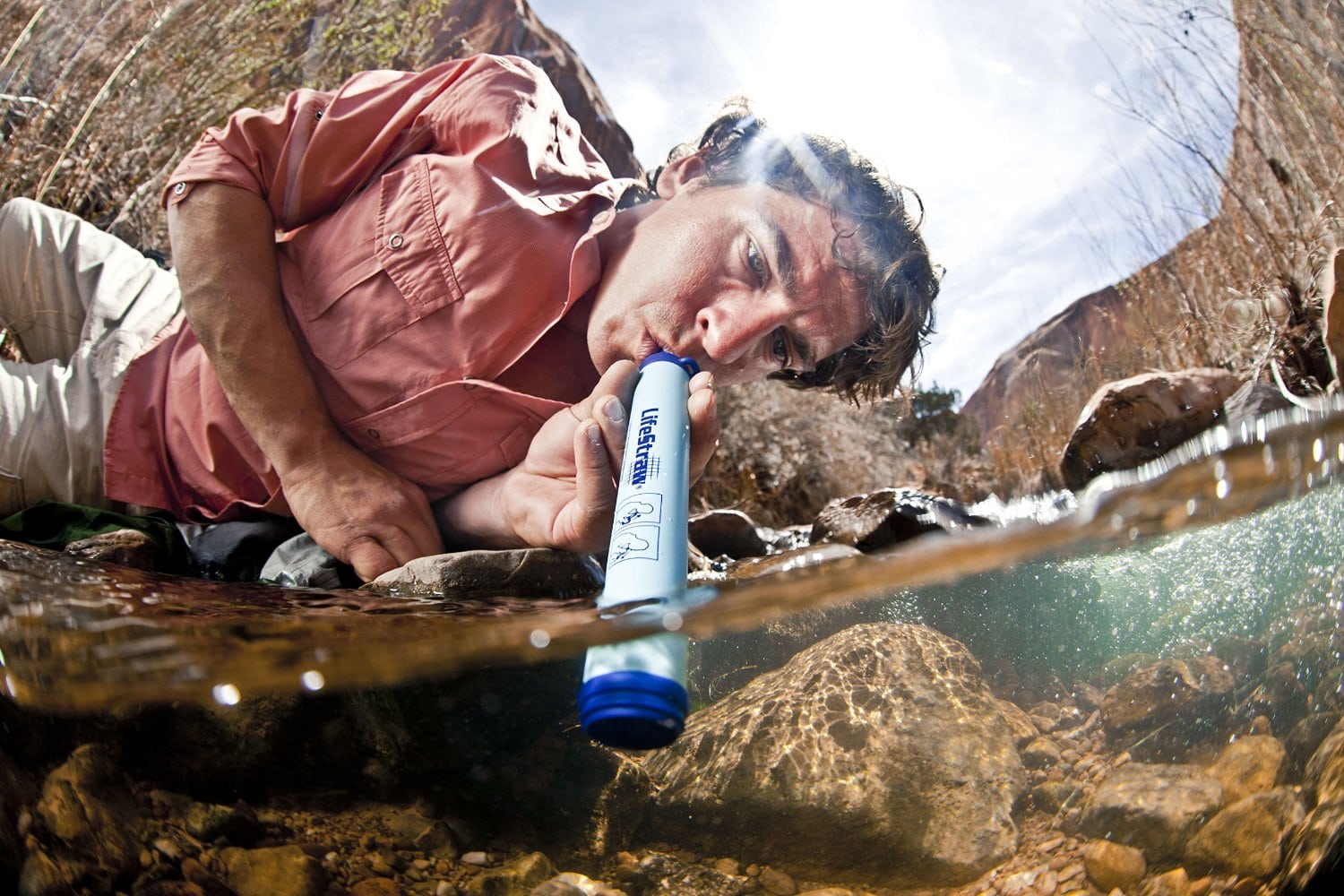
The LifeStraw Peak Series Solo is a sensible compact spare for a daypack, glovebox emergency kit, or traveler who wants a light individual filter. LifeStraw lists it at 1.7 ounces with a 0.2-micron membrane microfilter, a three-liter-per-minute flow specification, and up to 2,000 liters of stated filter life. It can be used as a drink-through filter or attached to standard bottles that use compatible 28 mm threading. Caps at both ends make packed storage cleaner than an exposed straw-only format.
It is a good backup because the package includes a dedicated backwash syringe, and it does not take up much room beside water and a small first-aid kit. It is less compelling as the only filter for multi-day travel. The small format encourages drinking from the source or from a single bottle, while the Sawyer and QuickDraw systems are easier to build around clean-water storage and camp chores.
As with every microfilter here, do not treat it as virus protection or chemical treatment. LifeStraw specifies bacteria, parasites, and microplastics reduction. The honest use case is a small individual freshwater filter, maintained according to its instructions and used with a separate plan when the water source risk rises.
Choose the format before you choose the brand
There are four useful field-water formats. A squeeze filter pushes water from a soft dirty-water pouch through the filter into a clean bottle. It is quick, light, and efficient for one person. A bottle-top filter uses a hard or soft bottle as the dirty-water container and is easy to sip from while moving. A gravity system hangs a dirty reservoir and lets time do the work, which is comfortable at camp but takes more space. A pump purifier handles larger volumes and higher-risk water at the cost of weight and effort.
For a day hike with predictable water, one bottle-first system can be enough. For backpacking, carry a dirty-water collector plus a separate clean bottle so you are never guessing which side touched untreated water. For a couple or group, favor capacity and setup simplicity over the lightest possible filter. A gravity system can save time at camp, but it should not be your only way to drink on the move.
Thread compatibility deserves a minute of attention before you buy. Many popular disposable bottles use 28 mm threads, but not every bottle does. Some filters accept a wide range of common bottles, some work best with their own reservoir, and some require adapters. Assemble the exact bottles, caps, hoses, and filter at home. A filter that works beautifully in a product photo can be frustrating if its clean-side cap does not fit the bottle you actually carry.
How to use a field filter without contaminating the clean side
Start with the cleanest practical water source. Moving water upstream of camps, trail crossings, livestock, and obvious runoff is generally preferable to a shallow puddle or still water near activity, but location does not certify safety. Let muddy water settle when practical, then collect from the clearer portion. If you have a bandanna or prefilter recommended by the manufacturer, use it only as a sediment step; fabric does not replace water treatment.
Keep a simple clean-versus-dirty system. Mark the dirty reservoir, never dip the clean bottle in untreated water, and do not put the outlet or clean-side cap on the ground. Wash or sanitize hands before handling food after filtering. These small habits matter because an excellent filter cannot undo contamination introduced after the water leaves it.
Follow the manufacturer’s exact directions for flow direction, backflushing, cleaning, and storage. Do not blow through the filter to “test” it. Do not assume an old filter works because water still moves through it. If a filter has been compromised by freezing, impact, or an unknown storage history, use the maker’s integrity procedure if available or replace it. Bring a backup treatment method on trips where a failed filter would leave you without safe water.
Plan for viruses and chemicals before the trip
On many North American backcountry routes, a quality microfilter may be the appropriate primary tool when bacteria and protozoa are the concern. That conclusion changes in places with poor sanitation, crowded watersheds, flood conditions, or other factors that increase virus risk. The CDC explains that portable microfilters do not reliably remove enteric viruses. Boiling kills viruses, bacteria, and parasites; a filter plus the correctly used disinfectant is another approach when boiling is not practical. Read the directions for contact time, water temperature, and turbidity. These steps are not interchangeable.
Do not expect tablets alone to solve every problem. Some disinfectants do not work well against certain parasites, especially in cold or cloudy water, which is why filtering first can matter. Conversely, a squeeze microfilter alone is not sufficient when viruses are the concern. Carry the method that fits your route, likely source, and tolerance for time and fuel use. If you are traveling internationally or responding to an emergency, consult current destination-specific health advice rather than relying on a generic outdoor filter recommendation.
Chemical risks are different again. A portable field filter is not a license to use water downstream of mining activity, agricultural runoff, a vehicle spill, or a floodwater source. Seek a known-safe water supply. Our emergency water-storage guide can help with keeping a reliable supply at home; stored water is often safer than trying to improvise treatment after a local contamination event.
Care, storage, and replacement are part of the purchase
A filter is only as useful as its condition. Backflush or shake-clean it on the schedule its maker recommends. If flow slows, address that before the next outing instead of accepting a frustratingly slow filter in the field. Use clean water for the manufacturer-approved cleaning process and store the filter as instructed. Many failures are really storage failures: a component was lost, the filter was allowed to clog, or no one remembered how old it was.
Protect hollow-fiber filters from conditions their makers warn against. Cold can be especially serious if a wet filter freezes, and damage may not be visible. Carry the filter close to your body in freezing conditions when its manual calls for that precaution, and treat any possible freeze event seriously. Never use a cracked housing, damaged threads, a torn soft flask, or a filter with an uncertain maintenance history as the sole treatment plan for an important trip.
Keep a small record in your trip notes: purchase date, meaningful use, last cleaning, and any suspected damage. A stated capacity is a manufacturer guidance number, not a reason to wait for a dramatic failure. Replacement filters, seals, and compatible bottles should be part of the cost comparison. The least expensive filter becomes expensive if it leaves you without a working setup halfway through a trip.
How we researched this guide
We compared current manufacturer specifications for pore size, stated effectiveness, flow rate, capacity, compatibility, cleaning method, and maintenance instructions. We also reviewed current CDC guidance on hiking, camping, travel, viral risk, and the limits of filtration. We favored systems whose capability is clear enough to match to a specific water risk. We did not perform hands-on tests. Amazon links may earn SuperGrail a commission, which does not change the selection criteria.
Questions hikers and travelers ask about portable filters
Is a water filter the same as a water purifier?
No. In practical field use, an ordinary microfilter is usually intended for bacteria and protozoa, while a purifier also addresses viruses under its stated test standard. Read the product’s actual claim rather than relying on the product title. Neither term means the device removes every chemical hazard.
Do I need a purifier for hiking in the United States?
Many hikers use a microfilter on freshwater routes where bacteria and protozoa are the primary concern. A purifier or a filter-plus-disinfection plan is more appropriate when virus exposure is credible. Route conditions, sanitation, flooding, local advice, and your own risk tolerance all matter. If you are uncertain, boil water when possible or follow current public-health guidance for the area.
Can I filter cloudy water?
You can, but sediment can slow the filter and make treatment less effective. Let water settle when you can, collect the clearest available water, and use a manufacturer-approved prefilter or cloth only to reduce sediment. Then follow the full filter or purifier procedure. Cloudiness does not tell you which germs or chemicals may be present.
What should I carry as a backup?
For a routine outdoor trip, carry a way to collect water, a clean bottle, the filter’s maintenance accessory, and a backup treatment method suited to the route. For emergency planning, combine a maintained field filter with stored water and a broader kit. Our emergency-preparedness guide covers the useful basics beyond water treatment.
Buy the tool that matches the route
The Sawyer Squeeze is the best default when you need versatility and can maintain it. The Platypus QuickDraw is a strong bottle-based alternative with an integrity check. The Katadyn BeFree is compelling when a light, one-liter drink-through setup is the priority. The MSR Guardian makes sense only when viral protection is worth the extra cost and pump. Match the equipment to the water risk, keep the clean side clean, and carry a second plan when a failed filter would end the trip.