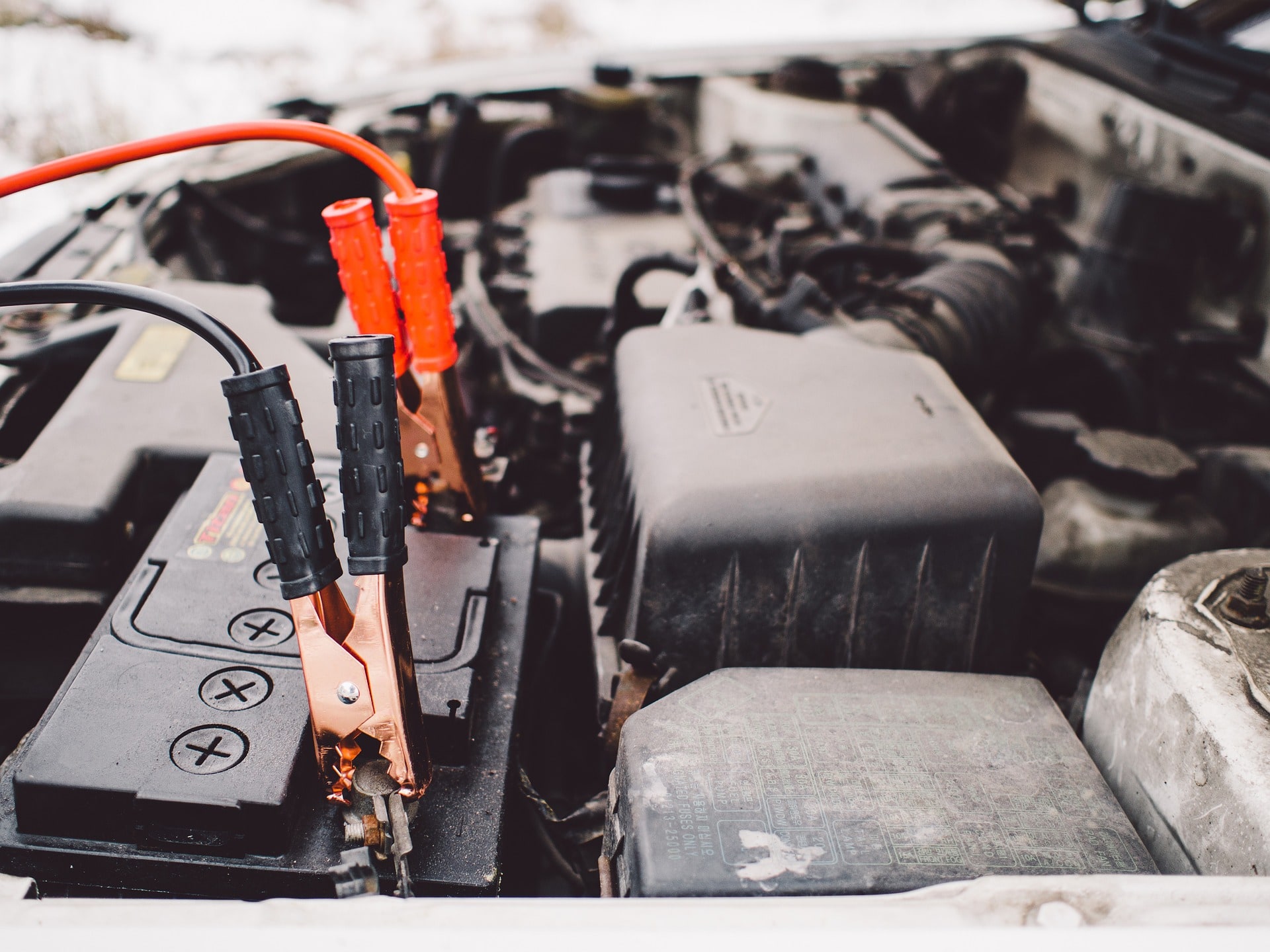
Jumper cables earn their place in a car because they solve a very specific problem: a 12-volt vehicle with a discharged but otherwise serviceable starter battery. They do not diagnose a failed battery, repair an alternator, make a damaged battery safe, or turn every hybrid and EV into a donor vehicle. The best set is long enough to reach without vehicle contact, thick enough for your engine and climate, and simple enough that you can use it calmly after reading your owner’s manual.
Start with that manual. It identifies the approved jump points, voltage, special warnings, and procedure for your vehicle. Modern vehicles may have remote terminals, battery-management systems, auxiliary batteries, or restrictions that make a generic diagram misleading. For EVs and hybrids, the high-voltage battery must never be jumped; many models have a separate 12-volt system that may be serviced only as the manual specifies.
Our quick picks
Best all-purpose cables: a 16-foot, 4-gauge copper-clad aluminum cable set such as the Energizer 4-Gauge Jumper Cables is a practical starting point for most cars and light trucks. The length gives you more flexibility in a parking lot, and the thicker cable is more useful in cold conditions than ultra-thin bargain sets.
Check Energizer 4-gauge jumper cables on Amazon
Best heavy-duty choice: 2-gauge cables such as the Cartman 2-Gauge Booster Cables are a better category for large engines, regular cold-weather use, and a household that wants one robust set. They cost more, weigh more, and take up more space; buy them for real need rather than a vague promise of “more power.”
Check Cartman 2-gauge jumper cables on Amazon
Best self-reliant alternative: a portable jump starter such as the NOCO Boost Plus GB40 is useful for a driver who often travels alone and cannot count on another vehicle. It still requires reading the vehicle and jump-pack instructions, keeping the pack charged, and knowing when to call for help.
Check the NOCO Boost Plus GB40 on Amazon
Buy cables before you need them, then read your owner’s manual with them in hand. A correct set stored untouched for years is only half prepared.When not to jump-start a vehicle
Stop immediately if the battery is cracked, swollen, leaking, frozen, damaged, or smells strongly of rotten eggs. Do not lean over it, touch leaking material, or try to “get one last start.” A battery can vent explosive hydrogen gas and damaged cases can expose acid. Call roadside assistance or a qualified technician.
Do not jump-start on a busy road, in an unsafe parking situation, or where you cannot work clear of traffic. Do not use a 24-volt commercial system to jump a 12-volt passenger vehicle. Do not guess at terminals or use cables with exposed wire, brittle insulation, badly corroded clamps, or loose jaws. A no-start condition can also be a starter, alternator, key, fuse, or electronic problem; repeated attempts can make the situation worse.
For a hybrid or EV, the vehicle manual wins. The high-voltage system is not a do-it-yourself jump-start target. Some models allow a specific 12-volt procedure; others require a defined terminal or sequence. If you cannot identify the approved points and procedure, call for help.
How cable gauge, length, and clamps matter
Gauge is counterintuitive: a smaller number means a thicker conductor. Two-gauge cables are heavier-duty than four-gauge, and four-gauge is generally a versatile household choice. Thin eight- or 10-gauge sets are easy to store but can struggle with current demand, especially in cold weather or on larger engines. Do not choose by the giant “peak amps” graphic alone; cable thickness, clamp quality, length, flexibility, and the actual vehicle all matter.
Sixteen feet is a useful length because vehicles do not always face each other neatly. It lets you position them safely without stretching cables across moving parts or forcing the cars to touch. Extra length is not a reason to run cables across a road or around a hot engine. Keep every cable clear of fans, belts, pulleys, and other moving parts before either engine starts.
Clamps should have strong springs, insulated handles, clean teeth, and enough jaw opening to grip the approved terminal or ground. Cheap clamps can look substantial while making poor contact through corrosion or paint. Inspect the set once or twice a year, coil it loosely, keep it dry, and replace it when insulation cracks or copper becomes exposed.
Our picks in detail
Energizer 4-gauge, 16-foot: best for most cars
This is the right category for a normal sedan, crossover, or light truck. Four-gauge cable strikes a usable balance between current capacity and storage bulk, while sixteen feet accommodates common parking positions. Choose it when you want a reliable manual backup and can usually ask another compatible vehicle for assistance.
Keep it in a protective bag with nitrile gloves, safety glasses, a flashlight, and the printed page from your vehicle manual that identifies jump points. Do not store the set loose with sharp tools that can damage the insulation. A few thoughtful accessories make the cable set easier to use without transforming your trunk into a workshop.
Cartman 2-gauge: heavy-duty option for demanding use
Two-gauge cables are more appropriate for a larger engine, very cold conditions, or a person who expects to help more than one vehicle. Their advantage is lower resistance; their trade-off is real weight and price. You do not need them simply because your car is a compact crossover, but they can be a durable buy for a household with trucks or rural driving.
They still cannot overcome a failed battery or improper connection. Never let the cable size create false confidence. Use the approved procedure, wait only as the vehicle manual recommends, and stop if the disabled vehicle does not respond after a reasonable attempt. A tow or diagnosis is cheaper than a damaged electrical system.
NOCO Boost Plus GB40: when another car is not dependable
A portable jump starter adds independence. It is useful for a solo commuter, remote driver, or anyone who does not want to ask a stranger to position a vehicle nearby. Choose a reputable model that states its compatible engine and voltage range, includes reverse-polarity and spark protections, and has clear charging and storage instructions.
A jump pack is not maintenance-free. Charge it on schedule, check its condition, and do not leave it where temperature extremes or physical damage are likely. Read the pack instructions before the emergency, not while standing beside a dead vehicle in rain. The pack must be compatible with the vehicle and connected only at the points specified in the manual.
A safe decision process before connecting anything
First, get to a safe location and set the parking brake. Put conventional vehicles in Park or Neutral as appropriate, turn off ignition and unnecessary electrical loads, and keep the vehicles from touching. Remove rings, watches, and loose metal jewelry. Wear eye protection and avoid leaning over either battery.
Next, inspect the battery and identify the correct terminals or remote jump points. Confirm the system voltage and look for damage. If either vehicle’s manual warns against the plan, stop. Check that clamps are clean, cables are intact, and the path between vehicles is clear of moving parts. If you are uncertain at any point, roadside assistance is the right next step.
For a normal 12-volt vehicle-to-vehicle jump, follow your owner’s manuals precisely. In many vehicles, the general pattern is positive to the disabled vehicle’s positive point, positive to the donor vehicle’s positive point, negative to the donor vehicle’s negative point, then the final negative connection to the approved unpainted ground point on the disabled vehicle away from its battery. This is not a substitute for the manual; it explains why you must not invent the order.
After a successful jump
Disconnect in the reverse order specified by the manual, taking care that clamps never touch each other or moving parts. Let the vehicle run only as the manufacturer advises, then arrange a battery and charging-system test. A short drive is not proof that the battery is healthy. A recurring dead battery may be old, internally damaged, undercharged, affected by a parasitic drain, or connected to an alternator problem.
Do not keep jumping the same vehicle day after day. That pattern is diagnostic information, not an invitation to buy thicker cables. Have the battery tested and ask a qualified shop to investigate the cause. For general vehicle supplies that support a safer roadside plan, see our emergency preparedness guide.
Common mistakes
Clamping to the wrong place: modern vehicles may designate remote jump terminals. Use them. Do not hunt under covers or attach to an unfamiliar component.
Using a damaged battery: a bulge, crack, leak, strong sulfur odor, or a battery that may be frozen is a stop sign, not a challenge.
Letting clamps touch: keep clamps separated until each is attached to the correct point. Do not place them on the engine bay where they can slide together.
Assuming an EV can donate a jump: check the exact manual. High-voltage systems and 12-volt systems are different, and vehicle electronics can have specific restrictions.
Buying the thinnest cable available: a cheap thin set may be difficult to use when current demand is high. Buy reasonable gauge and length once, then maintain it.
Price guide
Under $30: a basic four-gauge or six-gauge set can cover an ordinary small car if the listed construction and clamps are credible. Inspect it before relying on it.
$30 to $60: expect better length, heavier gauge, storage bags, and more durable clamps. This is the practical range for a long-term household set.
$80 and up: portable jump starters or robust two-gauge sets provide a more independent or heavy-duty solution. Pay for correct voltage compatibility, clear instructions, and a reputable warranty—not inflated peak-amp language.
Frequently asked questions
Are 4-gauge cables good enough?
For many cars and light trucks, yes. Four-gauge, sixteen-foot cables are a versatile starting point. Larger engines and frequent cold-weather use may justify two-gauge cables. The vehicle manual and cable maker’s specifications are decisive.
Can I jump an electric vehicle?
Never jump the high-voltage battery. Some EVs and hybrids permit a specific procedure for their separate 12-volt battery. Refer to the exact owner’s manual; if it is unclear, call a qualified professional.
Why will my car not start after a jump?
The issue may be a failed battery, poor cable contact, corrosion, a starter fault, a charging-system problem, or something else. Stop repeated attempts and have the vehicle tested.
Should I buy cables or a jump pack?
Buy cables if another compatible vehicle is usually available. Buy a reputable jump pack if you regularly drive alone or want a self-contained backup. Both require correct procedure and maintenance.
The bottom line
For most drivers, a 16-foot 4-gauge set is the sensible baseline; 2-gauge suits heavier use, and a reputable portable jump pack adds independence. Read the owner’s manual before an emergency, inspect the battery and cables, and stop when there is damage, uncertainty, unsafe traffic, or an EV/hybrid procedure you do not understand. Jumper cables are a useful tool, not permission to guess around a battery.
Cold weather and roadside realities
Cold weather increases the demand on a battery while making engine oil thicker and exposed hands less steady. That is why a thin, short cable set that works in a mild driveway can be frustrating in winter. Keep cables and a headlamp accessible instead of underneath luggage, sports gear, or a frozen trunk organizer. Add warm gloves, reflective clothing, and a way to call for help to the vehicle kit.
Never attempt a jump in traffic, during poor visibility, or where you cannot position the vehicles securely. Move to a safe location when possible. If the battery is suspected to be frozen, do not jump it; a frozen battery can rupture. If you are stranded in severe weather, personal safety and shelter come before getting the engine started. Roadside assistance exists for the situations where a simple cable connection is not a good risk.
Do not use an unfamiliar vehicle as a donor simply because it is nearby. Confirm compatible voltage and check both manuals. Some manufacturers discourage using a hybrid or EV as a donor vehicle, even though its 12-volt battery may be serviceable in a specific way. Avoid the assumption that a newer vehicle has more electrical capacity to spare.
Build a useful battery kit around the cables
Jumper cables work better when the rest of the vehicle kit supports them. Include a flashlight or headlamp, clean gloves, eye protection, a small terminal-cleaning brush if you know how to use it, the vehicle manual or relevant pages, and roadside-assistance contact information. Keep a phone charging option in the vehicle, but do not depend on a depleted phone as your only plan.
A battery tester or voltmeter can be useful for a driver who understands its limits, but it is not mandatory. A professional battery and charging-system test is the clearest next step after a jump, particularly when the car has had slow cranking, warning lights, repeated no-starts, or a battery near the end of its expected service life. Treat a jump as a temporary recovery, not maintenance completed.
How to prevent the next dead battery
Drive the vehicle regularly enough for its charging system to do its job, and investigate repeated short trips or long periods of storage. Keep battery terminals clean and secure, but do not service them while the battery is damaged or leaking. If the vehicle will sit for a long period, follow its manufacturer’s recommendation for storage, a maintainer, or battery disconnection. Modern cars can have electronics that make casual disconnection a poor idea.
Pay attention to patterns: a battery that dies after an interior light was left on is different from one that repeatedly dies overnight. The second problem may involve the battery, the alternator, a parasitic draw, a loose connection, or an accessory. A test saves time and protects the vehicle from repeated boost attempts. Replacing cables does not repair the underlying fault.
Before leaving on a trip
Take the cables out of their bag once. Check that red and black clamp markings are intact, the jaws open smoothly, the cable insulation is flexible, and no copper is visible. Read the jump-start page in your manual and take a photo of the approved terminal or ground point if it is hard to identify. Confirm the jump pack is charged if you carry one.
Then put the kit where you can reach it without unloading the car. This small check turns an emergency purchase into actual preparedness. It also gives you time to replace a damaged cable set before you need to use it at night, in cold weather, or on an unfamiliar road.
A note on cable storage
Coil cables loosely, with clamps separated and protected from moisture. Tight kinks can damage the conductor over time, while a damp cargo compartment encourages clamp corrosion. Put the set in a bag or hard case and check it at every seasonal vehicle inspection. A clean, dry cable set is much more likely to deliver current when a cold morning finally asks it to.
Our approach: We explain the trade-offs behind every recommendation. If you buy through an Amazon link, SuperGrail may earn a commission—our research remains independent.