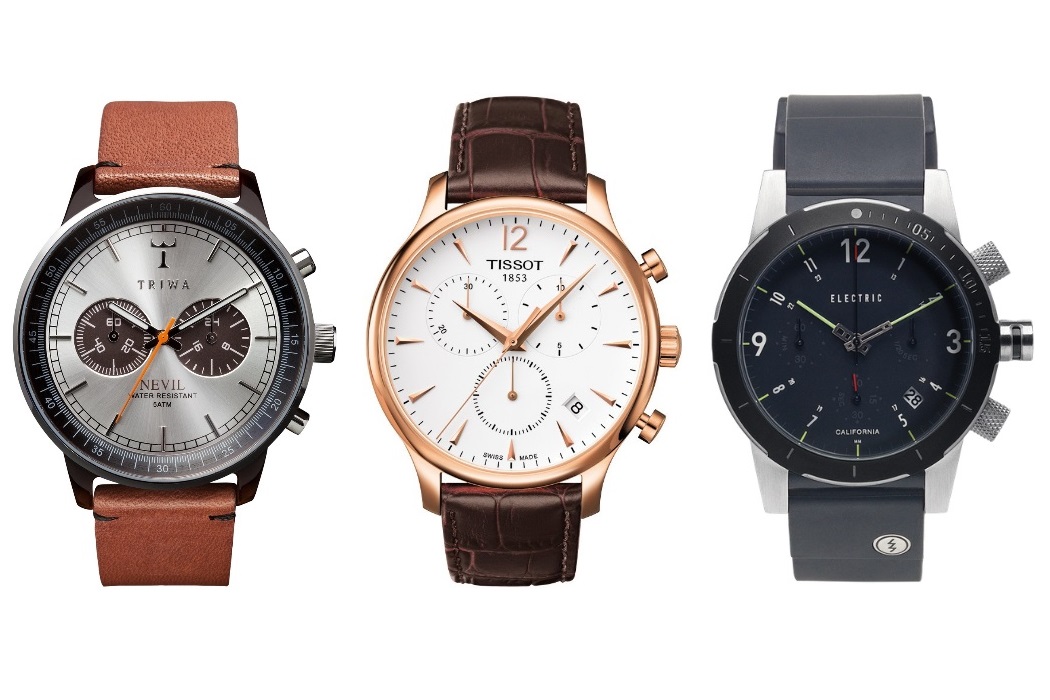
A $250 watch does not need to be a compromise purchase. It can be a solar-powered daily companion, a remarkably tough digital tool, a simple mechanical-looking field watch, or a capable fitness device. What it cannot be is every kind of watch at once. The best choice is the one that matches how you actually dress, move, travel, and remember to maintain your things.
The useful distinction at this price is not luxury versus cheap. It is ownership style. A solar digital G-Shock is the right answer for someone who wants precise time, alarms, and real abuse resistance without thinking about a battery. A smaller solar analogue watch is a better answer for a person who wants a simple dial under a sleeve. A smartwatch has a different job entirely: it is a rechargeable device that happens to tell time.
We researched current specifications, water-resistance ratings, case dimensions, crystals, movements, bands, and published prices from manufacturers, then looked at the practical trade-offs that matter after the first week. Prices and stock change, especially near a hard $250 ceiling, so treat current Amazon pricing as the deciding check before purchasing.
Our picks at a glance
Best watch under $250 for hard daily use: Casio G-Shock GWM5610-1
Check the Casio G-Shock GWM5610-1 on Amazon
The Casio G-Shock GWM5610-1 is an unusually complete everyday watch for people who do not want a watch to become another chore. Casio lists it at $165, with Tough Solar charging, Multi Band 6 radio timekeeping, shock resistance, and 200-meter water resistance. In plain English, it can charge from light, automatically receive time-calibration signals where supported, survive a clumsy day better than a dress watch, and handle swimming without requiring a second thought.
Its square resin case measures 46.7 by 43.2 by 12.7 mm and weighs about 51.7 grams. Those measurements can look large on paper, but the compact square shape and light weight make it wear smaller than many oversized round sport watches. The resin band is casual and utilitarian; this is not the pick for a formal suit. It is excellent for a commute, yard work, travel, swimming, a gym bag, or anyone whose ideal watch is the one they never take off.
The digital module includes world time across 31 time zones, a 1/100-second stopwatch, countdown timer, multiple alarms, and an LED backlight. The Multi Band 6 feature is a convenience, not a promise of perfect reception in every building or region. If radio reception is unavailable, it still functions as a normal quartz digital watch. Solar power is also not a reason to store it forever in a dark drawer; give it regular exposure to ambient light.
Choose this Casio if durability, low maintenance, and useful travel functions matter more than an analogue dial or a premium-feeling bracelet. Its mineral glass can scratch more easily than sapphire, and its resin look is specific. Those are honest trade-offs for a tough tool watch at this price.
Best analogue field watch under $250: Timex Expedition Field Post Solar 36 mm
Check the Timex Expedition Field Post Solar 36 mm on Amazon
The Timex Expedition Field Post Solar 36 mm is the smart pick for someone who wants a simple, classic watch without accepting disposable specifications. Timex lists it at $209 and gives it a 36 mm stainless-steel case, a solar-powered movement with up to four months of power reserve, a sapphire crystal with anti-reflective treatment, a screw-down crown and case back, and 100-meter water resistance. That is a serious collection of fundamentals for a watch that can work with jeans, a T-shirt, or a casual office outfit.
The 36 mm diameter and 44.5 mm lug-to-lug distance make this a particularly good fit for smaller wrists or anyone tired of oversized watch cases. The watch is about 12 mm thick, weighs roughly 53 grams, and uses an 18 mm fabric slip-through strap. A fabric strap is comfortable and easy to change, but it will absorb sweat and water more than a rubber or steel bracelet. Plan to rinse and dry it after a salty or muddy outing, and consider a second strap if you use the watch for exercise.
Solar power keeps battery changes out of the routine, while the sapphire crystal is far more scratch resistant than the mineral crystal common at this price. Sapphire is not indestructible—it can still chip or shatter under a hard enough impact—but it makes sense for a watch that will see daily wear. The 100-meter rating suits surface swimming and snorkeling; it does not turn a field watch into a diving computer.
Choose the Timex if you want an analogue piece that feels thoughtfully specified rather than merely inexpensive. It is not the best choice if you need alarms, timers, a backlit digital display, or a rugged resin case. It is the watch for someone who wants to glance at the time, enjoy the dial, and not fuss with it.
Best compact everyday analogue watch: Citizen Garrison BM8180-03E
Check the Citizen Garrison BM8180-03E on Amazon
The Citizen Garrison BM8180-03E is a dependable field-inspired everyday watch for people who prefer a smaller case and an easy-to-read dial. Citizen’s current price is $236, so it remains under the ceiling at the time of research but leaves very little price room. It has a 37 mm stainless-steel case, a black dial with Arabic numerals, luminous hands and markers, day and date displays, mineral crystal, a screw-back case, 100-meter water resistance, and the company’s light-powered Eco-Drive E101 movement.
At 37 mm wide with an 18 mm lug width, this Citizen is a better fit for smaller and medium wrists than many contemporary field watches. The case is restrained enough to work with casual clothes and is not so aggressively tactical that it looks out of place at dinner. Its nylon strap is lightweight and comfortable but, as with the Timex fabric strap, it is the part most likely to show wear or retain moisture. The good news is that an 18 mm strap is easy and inexpensive to replace when the original no longer suits you.
Eco-Drive is powered by light, so ordinary regular wear can keep the movement running without routine battery swaps. That low-maintenance approach is a big reason to choose it over a similarly priced conventional quartz watch. The trade-off is the mineral crystal: it is more resistant to shattering than some materials but less scratch-resistant than sapphire. If a perfectly unmarked crystal matters to you, the Timex is the stronger value; if you prefer a compact day-date field dial and a very light-powered ownership experience, the Citizen is compelling.
Buy only when the current Amazon price is still below your limit. This is a good watch, but a guide with a strict budget should not pretend price changes do not happen.
Best digital watch for travel and swimming: Casio G-Shock GWM5610U
Check the Casio G-Shock GW-M5610U on Amazon
The GWM5610U is closely related to the GWM5610-1, and marketplace listings often make the distinction confusing. The important point is to shop the specification, not only the product code. The current square 5610 family combines the same core reasons to buy a G-Shock in this category: solar power, radio-controlled timekeeping in supported regions, shock resistance, a lightweight resin build, and 200-meter water resistance. It is an especially good travel companion because it gives you alarms, a countdown timer, world time, and illumination without needing an app, cable, or daily charge.
If the two versions are similarly priced, choose the one with the preferred display, current warranty, and clearly stated current features from the seller. Do not pay a large premium for a near-identical code simply because a listing calls one version “rare.” The square G-Shock is at its best when treated as a practical object rather than a collectible chase.
How to choose a watch under $250
Pick the movement before the style
The movement is the machine that keeps time. It shapes the watch’s accuracy, maintenance, and personality more than a marketing image does.
Quartz watches use a battery and a quartz crystal. They are typically very accurate, affordable, and low maintenance, though the battery will eventually need replacement. Solar quartz watches use light to recharge an internal power cell or battery. They are still quartz watches, but regular exposure to light can eliminate routine battery changes for years. Casio Tough Solar, Citizen Eco-Drive, and the solar Timex in this guide fall into this category.
Mechanical and automatic watches use springs and gears. They can be appealing objects, but they are less accurate than quartz and need more care. At a $250 limit, do not buy an automatic solely because the word sounds upscale. Buy it because you understand and enjoy the winding, setting, and servicing trade-off. For the person who wants to put on a watch and leave it alone, solar quartz is usually the better answer.
Smartwatches are wearable computers. They require charging, depend on software support, and collect activity data that should not be treated as medical advice. They can be the right choice for workout logging, GPS, and notifications, but their ownership cycle is different from a solar analogue or digital watch. If all you need is the time, an alarm, and water resistance, a traditional watch is simpler and often more durable.
Get the size right
Case diameter is only one dimension. A 36 or 37 mm round field watch is compact and often works well on small to medium wrists. A 41 mm watch can feel entirely reasonable when its lugs are short. A square digital watch occupies the wrist differently from a round case. Thickness matters under a cuff, and lug-to-lug length often matters more than diameter for a very small wrist.
If you know a watch that already fits well, measure its case diameter and the distance from one lug tip to the other. Compare those numbers with the candidate watch. If you do not own a reference watch, cut a paper circle or rectangle to the advertised size and put it on your wrist. It is an imperfect test, but it prevents buying a 45 mm watch because it looked modest in a product photo.
Band width also affects the look and replacement cost. An 18 mm strap, like the Citizen and 36 mm Timex use, keeps the watch visually light. A resin G-Shock band is purpose-built and less dressy; replaceable fabric, leather, or nylon straps can change a field watch’s character quickly.
Understand water resistance labels
Water-resistance markings are not merely decorative. A 30-meter or “splash resistant” watch is not the same as a 100-meter watch, and a 100-meter watch is not the same as a specialized dive instrument. The G-Shock in this guide is rated to 200 meters; the Timex and Citizen field watches are rated to 100 meters.
For ordinary life—hand washing, rain, and occasional accidental splashes—most genuinely water-resistant watches are fine when their seals are intact. For swimming, choose a model explicitly rated for it, such as the 100-meter and 200-meter picks here. Avoid pressing buttons or operating a crown underwater unless the manufacturer permits it, and rinse a watch with fresh water after saltwater or chlorinated-pool use. Water resistance can diminish when gaskets age or the case is opened for service, so a rating is not a lifetime promise.
Crystal choice is a real trade-off
Watch crystals protect the dial. Acrylic is inexpensive, warm-looking, and can be polished but scratches readily. Mineral crystal is common, reasonably durable, and inexpensive, but it can collect visible scratches with hard daily use. Sapphire is very scratch resistant and is a standout feature when it appears below $250. The Timex Field Post Solar’s sapphire crystal is a major reason it earns a recommendation.
Scratch resistance is not the same as impact resistance. Sapphire can be vulnerable to a sharp hard impact even though it stays clearer through day-to-day abrasion. For a job-site or sport watch, case construction and shock resistance matter just as much as the crystal type. That is why a resin G-Shock with mineral glass remains a better work watch than a delicate sapphire-dialled field watch for many people.
Choose by use case
For travel
Choose the G-Shock. Its world-time function, alarms, countdown timer, solar power, radio time adjustment in supported locations, and 200-meter water resistance are genuinely useful on a trip. Its resin case also does not invite the same level of worry as a small dress watch while moving luggage, swimming, or navigating an unfamiliar airport.
For international trips, a watch does not replace a charger, travel adapter, passport copy, or a plan for keeping your phone powered. Pair it with our travel adapter guide if you are building a practical carry setup. The point of a separate watch is resilience: you can still see the time when your phone is charging, packed away, or out of battery.
For an office or smart-casual wardrobe
Choose the Timex or Citizen. Both have smaller stainless-steel cases, clear Arabic dials, and enough water resistance for normal life. The Timex is the more premium-feeling specification because of its sapphire crystal and screw-down crown. The Citizen is slightly smaller and adds a day-date display. Neither is a formal dress watch in the strict sense, but both are much easier to wear with a button-down shirt than a large resin digital model.
For outdoor work, sport, or a rough routine
Choose the Casio. The combination of shock resistance, a light 52-gram resin build, solar charging, and 200-meter water resistance is more valuable than a sophisticated dial when a watch may be scraped, wet, or bumped. It is not an elevation computer, satellite messenger, or medical monitor. It is a very durable timekeeping tool with useful alarms and timers.
For a first “real” watch
Start with the question, “What will make me wear it?” A small Citizen can make sense if you want an analogue day-date watch. The Timex is great if you value a scratch-resistant crystal and solar power. The Casio is the obvious pick if the ritual of setting an analogue watch does not interest you. A first watch should not be chosen to impress an imaginary watch forum; it should be comfortable, legible, and resilient enough to become part of your day.
How to care for an affordable watch
Give solar watches light, not punishment
Solar watches are happiest with ordinary exposure to indoor and outdoor light. Do not leave one on a hot dashboard for hours to “charge it faster”; heat is hard on watches and straps. If a solar watch has been kept in a dark drawer for a long time, follow the manufacturer’s charging guidance before assuming something is broken. A watch that is frequently covered by a thick cuff may need more occasional light exposure than one worn outside.
Clean the case and band
Wipe a metal or resin case with a soft, lightly damp cloth after sweat, sunscreen, saltwater, or dust. Rinse a water-resistant watch in fresh water after a saltwater swim, then dry it gently. For a nylon or fabric strap, follow the maker’s cleaning advice; keeping it wet in a gym bag is a reliable way to make it smell and wear out. Leather should not be treated as a swim strap even when the watch head has a high water-resistance rating.
Protect water resistance
Make sure a screw-down crown is actually screwed down before water exposure. Do not adjust the time or date while underwater. If the crystal is cracked, the crown feels loose, or condensation appears under the crystal, stop exposing the watch to water and have it inspected. A water-resistance rating describes a properly sealed watch, not a damaged one.
Common mistakes to avoid
- Buying a big case because it looks normal online. Check diameter, thickness, lug-to-lug length, and actual wrist fit.
- Assuming every watch marked “water resistant” is for swimming. Read the published rating and use it accordingly.
- Picking an automatic for the wrong reason. A solar quartz watch is usually more accurate and lower maintenance at this price.
- Ignoring the band. A watch may be technically excellent but sit unworn if its resin, fabric, leather, or bracelet does not suit your life.
- Leaving a solar watch in darkness indefinitely. It needs regular light exposure, not a sealed drawer.
- Using smartwatch health estimates as a diagnosis. Wearables can be useful for trends, but health concerns need a qualified clinician.
- Paying over the budget because of a “sale” label. Compare the current total price and return terms, not only a crossed-out number.
How we chose
We compared current watches that could plausibly remain under $250, giving extra weight to the details that determine long-term usefulness: movement type, actual case measurements, crystal material, water-resistance rating, case and band materials, time-setting convenience, useful travel functions, and whether the watch remains understandable and maintainable after the novelty wears off. We chose distinct recommendations rather than four versions of the same sports watch.
This is product research, not a claim that we wore every watch for years or tested every production variation. Retail prices, stock, strap materials, and model codes can change, so confirm the current specifications and Amazon listing before purchasing. SuperGrail links to Amazon for shopping and may earn a commission from qualifying purchases. That does not change how we frame the trade-offs.
Watches under $250 FAQ
Is a $250 watch good enough for daily wear?
Absolutely. At this price, you can find solar-powered movements, serious water resistance, sapphire crystal on selected models, shock resistance, and well-proportioned stainless-steel cases. Daily reliability comes from choosing the right tool and caring for its seals and strap, not from spending a four-figure amount.
Is solar better than battery-powered quartz?
Solar is usually better for a low-maintenance daily watch because it uses light to keep the movement powered. Conventional quartz is also accurate and dependable; it simply needs a battery change eventually. Pick solar if you prefer less routine maintenance, but make sure the watch receives regular light.
Can I swim with a 100-meter watch?
A watch explicitly rated to 100 meters is generally designed for surface swimming and snorkeling when it is in good condition and used according to the manufacturer’s directions. Keep crowns secured, do not operate controls underwater unless allowed, and rinse it after saltwater. It is not a substitute for a dedicated dive computer.
What is the best size for a small wrist?
Many people with smaller wrists find 34 to 38 mm round cases comfortable, but fit also depends on lug-to-lug length, thickness, band shape, and personal preference. The 36 mm Timex and 37 mm Citizen are strong starting points. Try a paper-size test or compare the measurements to a watch you already enjoy wearing.
Should I buy a smartwatch instead?
Buy a smartwatch if workout logging, maps, phone notifications, and rechargeable app features are central to your routine. Buy a traditional solar watch if you want reliable time, long intervals without charging, better simplicity, and a product designed to feel useful for years. These are different tools, not direct substitutes.
Our approach: We explain the trade-offs behind every recommendation. If you buy through an Amazon link, SuperGrail may earn a commission—our research remains independent.