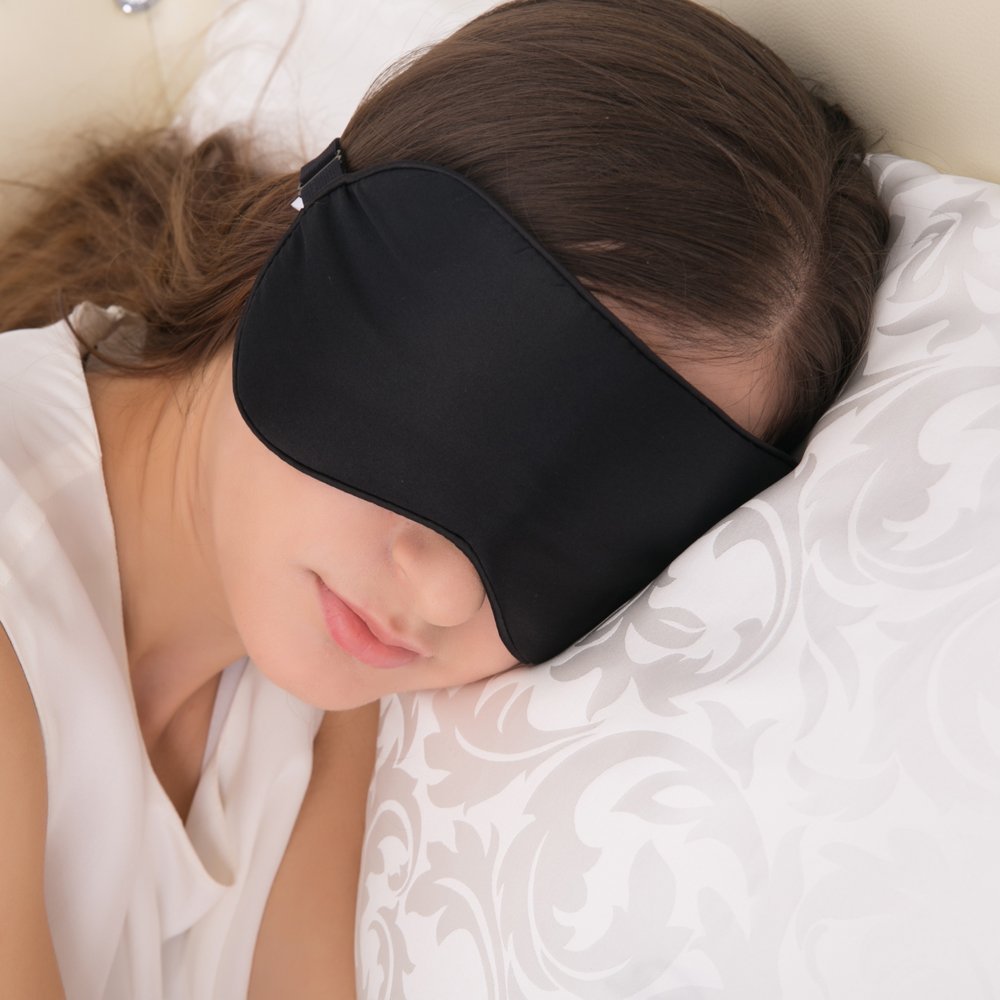
A sleep mask has one modest job: make unwanted light less distracting without becoming the new reason you are awake. That sounds easy, but fit changes everything. A mask that leaks light around the nose, flattens your eyelashes, catches in your hair, or presses into the pillow will quickly end up on the nightstand. The best mask is not necessarily the softest or the most expensive. It is the one you stop noticing after you put it on.
For this guide, we focus on everyday fit, not miracle claims. A mask can be useful for a bright bedroom, a daytime nap, a hotel with thin curtains, or a long flight. It cannot solve every cause of poor sleep. Use it as one part of a calmer, darker bedroom and pay attention to comfort, washability, and the way it behaves in your normal sleep position.
Our picks at a glance
| Pick | Best for | Why it stands out |
|---|---|---|
| Bucky 40 Blinks Sleep Mask | Most people | Lightweight molded foam cups, adjustable fit, and a modest price make it the practical everyday recommendation. |
| Bucky Ultralight Sleep Mask | Travel and smaller faces | A smaller, featherweight contoured option that takes less room in a carry-on and is easier to pack flat. |
| TEMPUR-Sleep Mask | People who dislike pressure on their eyes | TEMPUR material contours around the face and its adjustable closure makes this the more substantial comfort-focused choice. |
| Slip Pure Silk Sleep Mask | A luxurious, flat-style mask | Soft pure silk construction for buyers who prefer a non-molded mask and are comfortable paying a premium for the material. |
The price ladder matters here. The Bucky masks sit in the affordable everyday range, the TEMPUR mask costs more for a contoured material and adjustable closure, and Slip is a clear luxury purchase. Spend for fit and comfort before spending for a label. A $17 mask that stays on all night is more useful than a $70 mask you keep adjusting.
Best overall: Bucky 40 Blinks Sleep Mask
The Bucky 40 Blinks Sleep Mask is our best overall pick because it solves the basic fit problem without turning the mask into a complicated object. Its molded foam design creates room around the eyes, so the material does not need to rest directly on your eyelids. The mask is about 9 inches wide by 3 inches tall, with eye cups roughly half an inch deep, and uses an adjustable strap to fit a range of adult head sizes.
The deep cup shape is its major advantage. Flat masks can work beautifully for some people, but they tend to press on eyelashes and move when a side sleeper’s cheek meets the pillow. The 40 Blinks keeps a little airspace around the eyes while its soft edges sit against the face. That makes it a good choice for back sleepers, side sleepers who tolerate a modest amount of structure, and anyone who finds a standard satin eye cover too close to the lashes.
It is also refreshingly affordable. At around the high-teens price point, it is reasonable to keep one at home and another in a travel bag, or to replace a mask when it no longer feels clean or supportive. Bucky recommends hand washing cold with mild soap and letting it lie flat to dry. Do not use it with facial oils or creams that may shorten the life of the material. That maintenance is a small ask for a mask you wear against your face every night.
Who it is not for
Skip the 40 Blinks if even a light molded cup feels bulky against your pillow, if you prefer a very flat fabric mask, or if you need something especially small. It is sized for adults, and Bucky does not position it as a child’s mask. It is a good first choice, not a universal answer.
Best for travel and petite faces: Bucky Ultralight Sleep Mask
The Bucky Ultralight Sleep Mask is the smaller, lower-profile alternative for people who find a full-size mask too dominant on the face. It is slightly smaller than the 40 Blinks, at roughly 7.75 by 3.25 inches, and retains the useful contoured shape and adjustable strap. That combination makes it the better travel pick: it weighs little, fits in the side pocket of a carry-on, and does not ask you to make room for a thick sleep accessory.
Use this one on planes, in hotels, for midday rest, or as an everyday mask if your face is smaller or your preferred sleep mask is almost invisible. It is not as substantial as the TEMPUR option below, and it does not have the luxe texture of silk. It earns the recommendation because it is easy to own. A mask that stays in a travel pouch is far more helpful than an elaborate sleep setup left at home.
As with the larger Bucky mask, follow the care instructions: hand wash cold with mild soap, avoid soaking or microwaving it, and dry it flat or hang it to dry. Travel masks spend time in crowded bags, airplane seats, and hotel nightstands, so keeping a small washable pouch with it is a nice habit. Put the mask away dry, not immediately after using it against a moisturized face.
Best for cushioned contour: TEMPUR-Sleep Mask
The TEMPUR-Sleep Mask is the upgrade for the person who has tried flat masks and disliked the feeling of fabric pressing on their eyes. It uses TEMPUR material to contour around the face and has an elasticized strap with a Velcro closure for adjustment. The design is intended to block light while keeping pressure off the eye area, and it comes in around the $29 range—more than a simple fabric mask but still well below luxury silk pricing.
Choose this style when a mask needs to feel padded and stable, not merely dark. The contour can be particularly pleasant for back sleepers and people who want a clear pocket around their lashes. The trade-off is that it has more bulk. A substantial mask is not always ideal for a side sleeper who presses one cheek hard into a pillow, and it takes up more room in a small travel pouch than the Bucky Ultralight.
There is one important purchasing detail: Tempur-Pedic states that it cannot accept returns on the mask because it is a personal product. That makes measuring and buying from a source you trust particularly important. Do not tighten the strap in an attempt to eliminate every possible light gap. A secure but comfortable fit is the goal; a mask that gives you a headache or leaves deep marks is too tight for the job.
Best luxury flat mask: Slip Pure Silk Sleep Mask
The Slip Pure Silk Sleep Mask is the premium pick for someone who prefers a soft, flat mask and cares about the feel of the fabric against the face. Slip uses its branded silk fabric with a silk filler and internal liner. It is a much more expensive option than the foam masks in this guide, which means it has to be purchased for its material and experience—not because silk alone guarantees a better fit.
Flat masks have a quiet advantage: they pack exceptionally well and can feel less obtrusive for people who do not like molded eye cups. They also have a limitation: light blocking depends heavily on the mask’s shape and strap tension. If you need complete darkness and frequently find light leaking around your nose, a contoured Bucky or TEMPUR mask is a more practical starting point. If you want a smooth, plush mask for travel and a gentle facial feel, Slip is the appealing upgrade.
Silk is not a set-it-and-forget-it material. Follow the specific care label, keep it away from rough hardware in a suitcase, and wash it often enough to keep face products from accumulating. Do not buy it as a substitute for making the bedroom darker; buy it because this is the mask style you will be happy to wear.
How to choose a sleep mask that actually fits
Start at the nose bridge
The fabric can be perfectly opaque and still let in a beam of light from a poorly fitting nose bridge. Try the mask lying down with a lamp on. Move your head side to side, open your eyes, and notice whether the bright gap moves with you. A little ambient glow may be tolerable; a direct stripe of light across one eye is not. Do not solve a gap only by tightening the strap, because that often trades light leakage for pressure.
Decide whether you need eye clearance
Contoured masks create a small space around the eyes. That helps people who dislike eyelid pressure, wear lash extensions, or want to blink normally under the mask. A flat silk or fabric mask rests closer to the face, which some people find more secure and less bulky. Neither is objectively better. The right answer is the sensation you tolerate in your usual sleep position.
Pay attention to the strap and closure
An adjustable strap is more important than a fashionable exterior. It lets you change the fit between a back-sleeping night and a side-sleeping night, and it is more forgiving of different head sizes. Check where the closure lands. A bulky buckle or rough hook-and-loop edge can become irritating if it sits directly against a pillow. A smooth elastic strap may be simpler, but it can stretch over time and pull on hair.
Choose a material you will clean
A sleep mask picks up skin oil, hair products, moisturizer, and the dust of travel. Foam masks often need gentle hand washing. Silk needs careful laundering. A simple cotton-like mask may be easiest to clean but can be less effective at blocking light. The best mask is one whose care instructions fit your life. If hand washing is realistic for you, a contoured Bucky is easy to live with. If you will only wash something with the rest of your laundry, buy accordingly.
Choose by where and how you sleep
For a bright bedroom
Prioritize contour and an adjustable strap. The Bucky 40 Blinks is our first choice because the deep eye cups aim to block light without pressing on the eyes. Try it at home before relying on it for an important early-morning sleep-in. If streetlights or sunrise are a constant issue, blackout curtains or a room adjustment may ultimately be more convenient than wearing a mask every night.
For side sleepers
Side sleepers should look for a mask that does not have a rigid edge exactly where the pillow presses the face. The smaller Bucky Ultralight is a strong first option, but every face and pillow combination is different. Avoid a strap that slips down the back of the head when you turn. Test the mask for several minutes in your ordinary position instead of judging it upright in a mirror.
For travel
Packability and easy cleaning matter more than a showroom-luxury feel. The Bucky Ultralight packs well and is purposefully small. A silk mask also takes little space, though it needs more care around spills and rough bag hardware. Pair any mask with earplugs or our white-noise machine guide when sound, rather than light, is the bigger distraction at home. On a flight, put the mask on only when you are ready to rest so it does not pick up crumbs and seat grime unnecessarily.
For daytime naps
A mask can be particularly useful for a short daytime rest when you cannot change the room’s window coverings. Choose one that is easy to put on and remove without disturbing your hair or makeup. Keep expectations reasonable: a mask can reduce light, but a regular sleep schedule, comfortable room temperature, and the amount of caffeine you had earlier will still matter.
A simple at-home fit test
- Put the mask on in a lit room and adjust the strap while seated.
- Lie in your normal sleep position and turn your head as you would during the night.
- Open your eyes and look for direct gaps at the nose, cheeks, and temples.
- Notice whether the mask presses on your lashes, eyelids, ears, or the back of your head.
- Wait five minutes. Small irritations become obvious quickly when you are still.
- Remove the mask and check whether the strap has pulled your hair or left uncomfortable pressure marks.
A fit test is more informative than a review that describes a different face shape or sleep position. If the mask fails the test at home, do not convince yourself that it will improve at 3 a.m. Cleanly return it if the seller permits it, or reserve it for travel if it is still useful for shorter rests.
Care, replacement, and hygiene
Wash a mask according to its care label as soon as it starts feeling oily, dusty, or less fresh. Make sure it is fully dry before putting it in a drawer or pouch. Hand washing with a mild cleanser is common for molded foam masks. Silk generally needs gentler treatment. Avoid bleach, high heat, and harsh products that can damage elastic or fabric.
Replace the mask when the foam no longer springs back, the strap stops holding adjustment, the fabric becomes rough, or cleaning cannot restore a fresh feel. Bucky suggests a replacement every three to six months for its masks; your actual interval will depend on use, skin products, travel, and care. A mask is inexpensive enough that lingering with a degraded one rarely makes sense.
What a sleep mask cannot fix
A sleep mask is a comfort tool, not a treatment. It can make a bright room feel darker, but it cannot resolve persistent insomnia, pain, breathing problems, anxiety, medication effects, or a schedule that leaves you constantly exhausted. If sleep difficulty is new, severe, persistent, or paired with concerning symptoms, speak with a qualified healthcare professional rather than endlessly buying new bedding accessories.
For ordinary environmental interruptions, begin with the basics: make the room as dark, quiet, and comfortable as you can; keep bedtime reasonably consistent; and use a mask when it removes a specific nuisance. A small tool used for the right reason is much more helpful than a grand promise.
Frequently asked questions
What is the best sleep mask overall?
The Bucky 40 Blinks Sleep Mask is our best overall pick. Its contoured foam cups create clearance around the eyes, the strap adjusts for fit, and the price is low enough to make it a practical everyday choice.
Are contoured sleep masks better?
They are better for people who dislike pressure on their eyelids or lashes and for many people who need more reliable light blocking around the eyes. A flat mask can be better for someone who wants the thinnest, least structured feel. Fit matters more than the category label.
How tight should a sleep mask be?
It should stay in place when you turn over without pressing into your eyes, temples, or ears. A mask that needs to be painfully tight to block light is the wrong shape for your face. Adjust the strap slowly and test it lying down.
How often should I wash a sleep mask?
Follow the maker’s instructions and wash it whenever it picks up skin oil, face products, or travel grime. For a mask used nightly, regular gentle washing is more realistic and hygienic than waiting until it visibly looks dirty.
The bottom line
Buy the Bucky 40 Blinks for the best balance of eye clearance, adjustable fit, washability, and price. Choose the Bucky Ultralight for a smaller travel-friendly mask. The TEMPUR-Sleep Mask is worth the extra cost if cushioning around the eyes is your priority, while the Slip Pure Silk Sleep Mask is the luxury flat-mask choice. Start with fit, keep the mask clean, and use it to solve a specific light problem—not as a promise that it will fix everything.