A luggage tag is not exciting, which is exactly why it is worth getting right. Its job is simple: help a person who finds your bag get it back to you without broadcasting more personal information than the situation requires. That is different from tracking a bag in transit, and it is different from an airline’s printed baggage tag. The best setup often uses two layers: a readable contact tag on the outside and, if you want it, a tracker tucked inside.
For a conventional tag, we like Travelambo Privacy Luggage Tags: a simple privacy-flap design is easy for a good-faith finder to use and keeps the information card covered during ordinary handling. If you would rather share contact details through a scan instead of printing them on a card, look at Dynotag Luggage Tags. For iPhone users who want to locate a misplaced bag, add an Apple AirTag inside the bag—but do not mistake it for a contact tag or an airline baggage system.
The rest of this guide is about the boring details that make tags work: what to write, what to leave off, where to attach them, why a cheap loop matters, and when a tracker is useful.
Our picks at a glance
- Best traditional luggage tag for most people: Travelambo Privacy Luggage Tags. A straightforward covered information card that keeps your details readable to a finder without displaying everything at a glance.
- Best digital contact tag: Dynotag Luggage Tags. Each tag uses a unique QR code and web address to direct a finder to the contact record you maintain, with no battery, radio, or app connection on the tag itself.
- Best tracker to keep inside a checked bag for iPhone users: Apple AirTag (2nd generation). Works with Apple’s Find My network, has a user-replaceable CR2032 battery, and should complement—not replace—an external contact tag.
- Best upgrade for a hard-sided suitcase: a tag with a stronger cable or a concealed, replaceable attachment. The printed card matters more than the logo; spend on the attachment only if the bag will be handled roughly.
Best traditional luggage tag for most people: Travelambo Privacy Luggage Tags
The Travelambo Privacy Luggage Tags represent the most useful version of the classic tag: a durable outer cover, a removable information card, and a flap that shields the card during normal travel. You do not need an elaborate smart system to make a bag identifiable. You need a tag that stays attached and gives a person an obvious way to contact you.
A traditional tag has one advantage that no phone-based system can match: it works for anyone who can read the card. A hotel employee, airline baggage agent, taxi driver, or fellow traveller does not need the right phone, a network connection, an app, or a willingness to scan an unfamiliar code. If the bag is found, a name and a contact method are enough to begin the return process.
The privacy flap is the reason to buy this style rather than an exposed paper card. It makes the information available when someone intentionally opens the tag, rather than putting your full details on display in a baggage claim line. The flap is not a security system; a determined person can still open it. It simply reduces casual exposure, which is the sensible goal for luggage information.
Use the tag on a bag that is checked, gate-checked, or likely to be separated from you: a suitcase, duffel, stroller travel bag, or larger backpack. It is less useful on a daily commuter bag that never leaves your side. Make sure the loop goes through a sturdy handle or a reinforced attachment point, not a thin decorative zipper pull. The best tag cannot help if the attachment breaks on the first conveyor belt.
Best digital contact tag: Dynotag Luggage Tags
The Dynotag Luggage Tags are a good choice for travellers who prefer a private, updateable contact record. Each tag carries a unique QR code and web address. A finder can scan or visit that address, while you control the information attached to the record. The tag itself has no battery, electronics, or radio, so there is nothing to charge and no Bluetooth network to depend on.
That makes a digital contact tag different from a tracker. It does not show you where the bag is. It gives a finder a route to reach you without requiring your phone number and home address to be visibly printed on the outside. The value is flexibility: you can update a contact method for a particular trip, use a dedicated email address, or limit the information visible through the record.
A QR-based tag has a few practical limits. The person who finds the bag needs a phone or browser and needs to be willing to use it. Some people are understandably cautious about scanning unknown codes. That is why we would still put a minimal written card inside the bag, even if the outside uses a digital tag. Think of the QR tag as a useful first door, not the only path back to you.
Use a contact method you will actually monitor while travelling. A phone number that accepts calls and messages, or an email address with notifications turned on, is more useful than an old address that you check twice a week. Before leaving, test the tag from another phone and make sure the information shown is what you intend.
Best tracker for checked luggage for iPhone users: Apple AirTag
An Apple AirTag is not a luggage tag, but it can be a valuable companion to one. The current second-generation model works in Apple’s Find My network, has a louder speaker and expanded Precision Finding range than the original, and uses a user-replaceable CR2032 coin-cell battery. It is designed for people with a compatible iPhone or iPad and an Apple Account; it is not a general-purpose tracker for every phone platform.
Place the AirTag inside the bag, ideally in a small internal pocket or a discreet holder. Do not hang it visibly from the exterior as your only identifier. A tracker can help you see when a bag is nearby or appears to have arrived in a location, but it does not give an airline an address for return delivery and it cannot force a lost bag to move. The external contact tag still handles the human part of the process.
Use AirTag information calmly. Location updates depend on the Find My network, nearby Apple devices, connectivity, and the circumstances around the bag. A location on a map is helpful context for a conversation with an airline; it is not proof that a bag is immediately accessible or an invitation to enter a restricted baggage area. If your checked luggage is delayed, file the airline report first, keep the baggage receipt, and add the tracker information only when it is useful to the agent.
The second-generation AirTag is rated IP67 for dust and water resistance and uses a replaceable coin cell, but resistance can diminish with wear. Check the battery before a long trip and replace it early if the Find My app indicates it is low. Keep the tracker in carry-on luggage if it is spare or unattached? No: an AirTag that is installed inside your checked suitcase can travel with the suitcase, but keep the distinction clear from power banks. A lithium-ion power bank must stay in the cabin; an AirTag uses a small CR2032 coin cell and is a different item. Follow your airline’s current rules for the whole bag.
A visible tag, a private contact method, and a tracker solve different problems
It helps to separate the three jobs before buying anything.
- Visible identification: an exterior tag lets a person who finds the bag connect it to you. It should be readable, secure, and discreet.
- Private contact details: a covered card or QR-based record lets you control how much is visible to strangers. It should contain one reliable way to reach you.
- Location awareness: a tracker helps you locate a bag or establish that it has arrived nearby. It does not replace contact information, an airline claim, or a lock.
The most dependable arrangement is modest: a covered tag outside, a second contact card inside, and a tracker only if it suits your phone and travel habits. There is no need to cover every handle with products. Redundancy works because the layers fail differently. An exterior tag might tear off; an interior card might be found after a zipper is opened; a tracker might offer a useful last-seen location without ever being noticed by a finder.
What to write on a luggage tag
Use enough information to be reachable, not enough to advertise your home to everyone handling the bag. For most trips, write your name, a mobile number that works at the destination, and an email address you monitor. You can add a city or a temporary hotel contact when it genuinely helps, but you rarely need your full home street address on the exterior.
If you want to be especially cautious, use an email address created for travel and shopping, or list a phone number with a reliable messaging service. Make sure the voicemail greeting is active and messages are not blocked from unknown callers. A tag that lists a disconnected number is worse than no tag because it creates false confidence.
Keep the card legible. Use dark ink, avoid tiny handwriting, and update it when your phone number or email changes. Laminated cards look tidy but can be annoying to replace; a covered tag with a simple paper insert is often easier to maintain. Put the same minimal details on a card inside the main compartment. If an external tag is removed or a bag is opened by staff, the internal card gives you another route back.
What to leave off
Do not put a full home address, a detailed itinerary, your passport number, loyalty-program number, or a work title on a visible luggage tag. None of that is needed for a finder to reach you. Avoid announcements such as “away until Tuesday” or labels that identify expensive equipment. A luggage tag should help with return, not provide a biography.
Be careful with children’s bags. Use a parent or guardian’s contact information, not the child’s full name, school, or routine. A bright tag can make a child’s bag easy to spot without turning it into a source of personal information.
Attachment is the part most tags get wrong
Tags fail at their attachment points. A beautiful leather tag with a weak buckle is less useful than a plain plastic one with a reliable loop. Before travel, tug the attachment with the bag full. It should not pop open, stretch excessively, or depend on a fragile zipper pull.
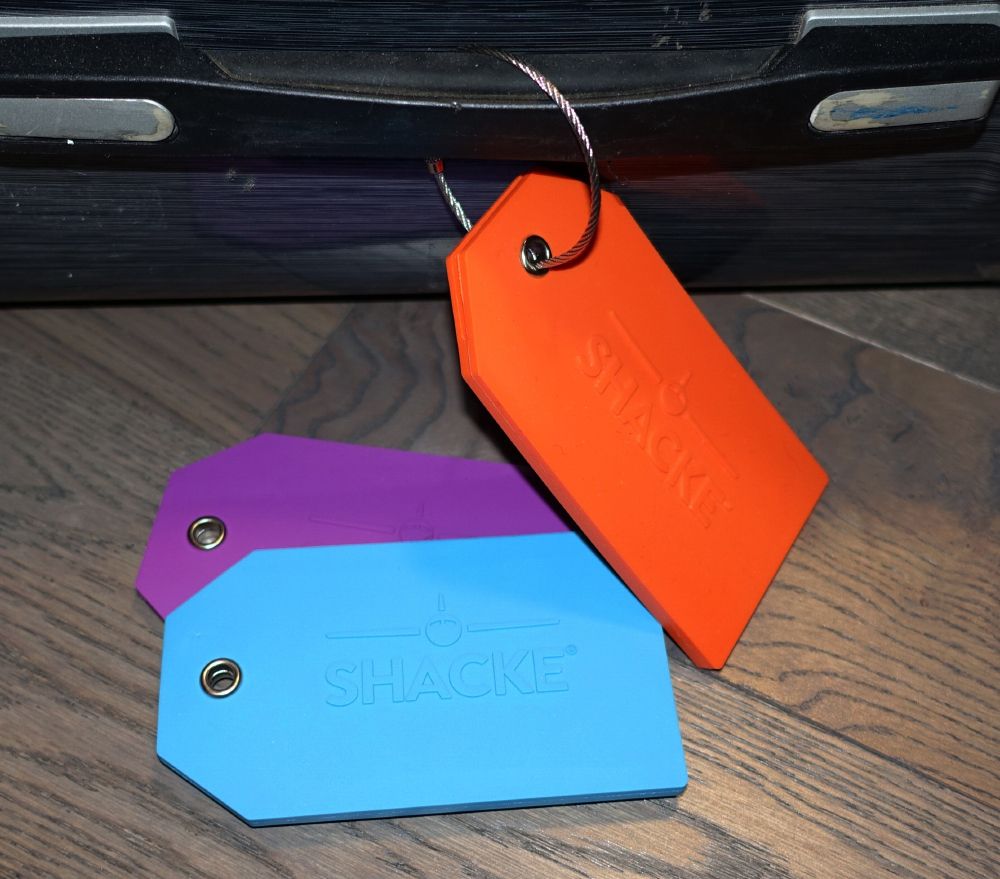
For a hard-sided suitcase, attach the tag to a recessed handle if possible. For a duffel, use a reinforced carry handle or a strong webbing loop. Avoid placing it where it will drag along the ground or block a zipper. If you use a cable attachment, make sure it does not have a sharp end that can scratch the bag or catch on fabric.
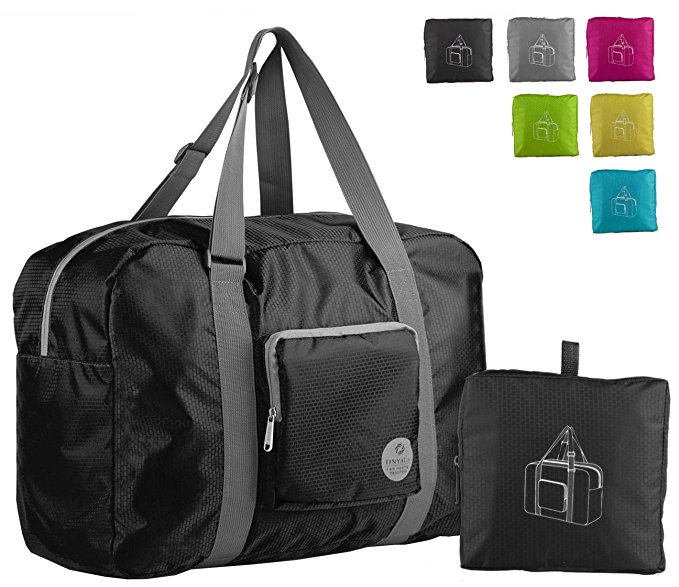
Consider carrying a spare tag or spare loop in a small travel pouch. The most common repair is not replacing the information card; it is replacing a torn strap. This is especially worth doing with a light packable travel duffel, where an external tag can be snagged more easily than on a rigid suitcase.
Trackers are useful, but they are not airline systems
Airline baggage tags, barcodes, and claims processes operate independently from consumer trackers. A tracker may show that your suitcase is at an airport, but the airline’s report and baggage receipt are still the official tools for recovering a delayed bag. Keep those documents, take a photo of the suitcase and its contents before you leave, and file the report before relying on a map location.
Do not put a tracker in a place that makes it hard to find when the battery needs changing. An interior pocket, a small non-metal holder, or a pouch near the lining is better than burying it at the bottom of a tightly packed case. Give the bag a clear name in the app—“Black carry-on” is less useful than “Blue checked suitcase”—and remove or rename the tracker when you sell or give away a bag.
If you travel with a power bank, follow the separate battery rules. Power banks must stay in the cabin and may not go inside checked luggage. The travel charging guide has a clear checklist for chargers, cables, and battery packs.
Tags, locks, and bright colours
It is reasonable to use a colourful tag or a distinctive strap to identify a suitcase quickly, but do not confuse visual identification with security. A luggage lock can deter casual opening, depending on local rules and airline requirements, but it does not prevent loss. A tracker can improve your awareness, but it does not protect contents. A tag provides contact details, but it cannot confirm ownership.
Use each item for its actual purpose. A bright tag can make baggage claim faster. A privacy flap limits casual exposure. An internal card gives you redundancy. A tracker provides location context. Put your energy into the basics first: a bag you can recognize, contact details you can answer, and a packing plan that keeps valuables with you.
How we chose
We evaluated luggage identification by usefulness, privacy, attachment, and maintenance—not decoration. The traditional covered tag is still the best starting point because it works without a battery, network, or app. A QR-based tag adds a private, updateable way to offer contact details. An AirTag is worthwhile for Apple users who want location awareness, but it is an additional layer, not a replacement for human-readable identification.
We also favoured products that make their limitations clear. A tag should not promise security it cannot provide. A tracker should not be treated as an airline system. The recommendations will be revisited when product availability, tracker compatibility, or travel rules change. Use the Amazon links as a current availability check rather than relying on a fixed price.
Luggage tag questions, answered
Should I put my address on a luggage tag?
Usually, no. A name, mobile number, and monitored email address are generally enough to begin a return. A full home address adds privacy risk without being necessary on the exterior of a travel bag.
Should I use an AirTag and a luggage tag?
Yes, if you use a compatible Apple device and want location awareness. Use the AirTag inside the bag and a contact tag outside. They solve different problems and work better together than either does alone.
Can I put an AirTag in checked luggage?
An AirTag installed inside a checked bag uses a small coin cell, but airline rules can change. Check your carrier’s current policy. Do not confuse it with a lithium-ion power bank, which must stay in the cabin.
What makes a luggage tag private?
A cover or flap reduces casual visibility of the card. A QR-based tag can provide a private online contact path. Neither is absolute privacy, so include only the information a finder needs to contact you.
What is the most common luggage-tag failure?
The attachment breaks or the card becomes unreadable. Check the strap before each major trip, attach the tag to a strong handle, and keep an internal contact card as backup.