A hockey equipment bag has one job that affects every ice time: get wet, awkward gear from the car to the locker room and back without becoming a mess. The right choice depends less on brand loyalty than on the route to the rink. Long parking lots and heavy senior gear favor wheels. Stairs, tight trunks, and smaller players can favor a carry bag or a wheeled backpack. Goalies need far more volume than skaters and should not try to force their pads into a standard player bag.
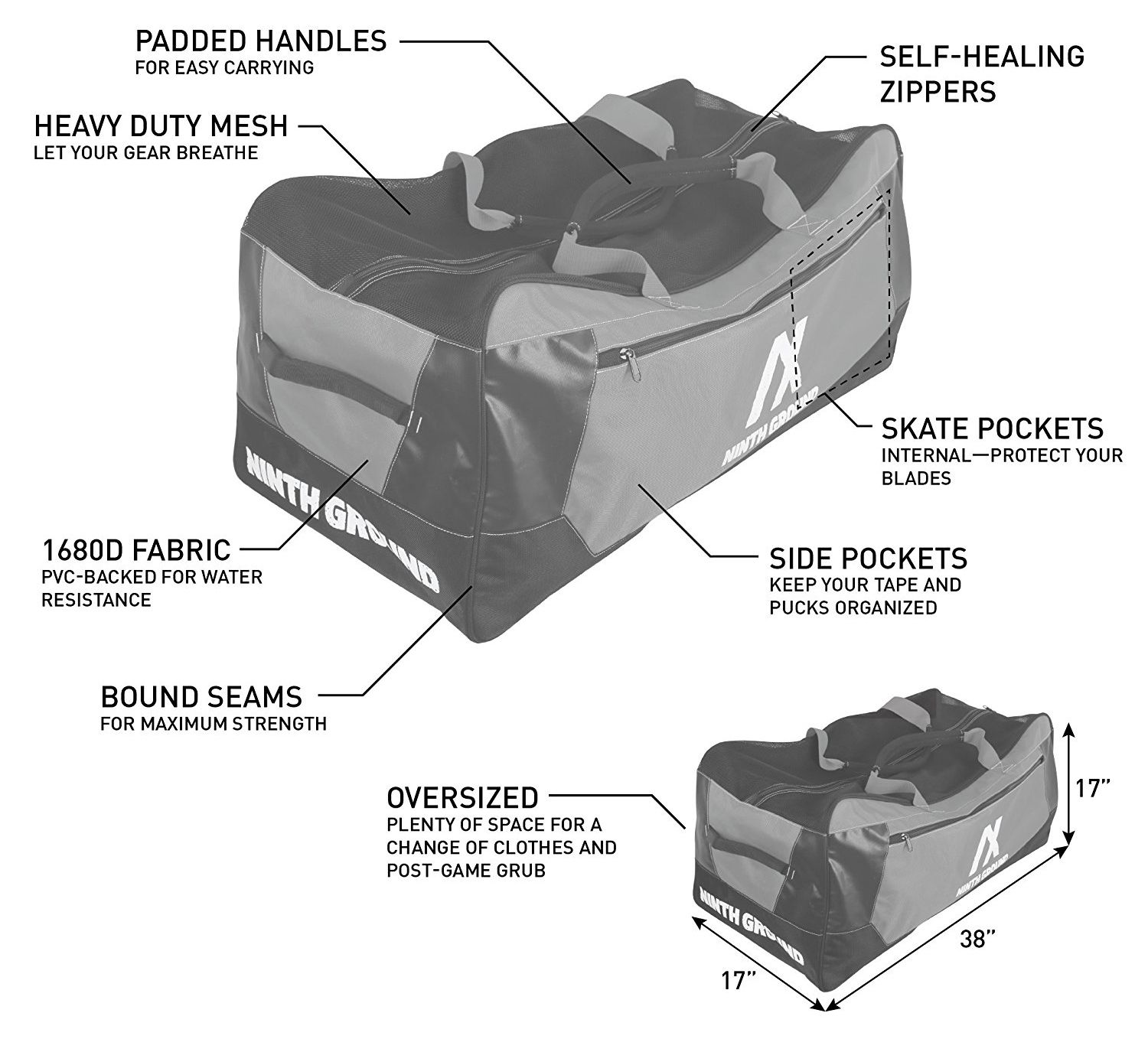
For most adult and teen skaters, choose the BAUER Premium Wheeled Bag. Its oversized wheels, reinforced pull handle, separate end pockets, ventilation panels, and 35-by-20-by-18-inch senior size make it a sensible everyday roller. The BAUER Core Wheeled Bag is the straightforward lower-cost alternative for a player who wants one big compartment and does not need elaborate organization. For a young player who needs to carry or roll their own gear, the BAUER Elite Wheeled Backpack Junior gives a smaller skater both options. Goalies who face stairs or prefer lifting a bag into a vehicle should consider the BAUER Pro Carry Bag Goal, a large 317-liter carry bag built around goalie-sized capacity.
None of these bags can dry equipment for you. The most valuable routine is still emptying the bag after practice, opening every compartment, and letting gear air out completely. A well-chosen bag makes that routine easier by giving wet skates, tape, and protective gear a place to live without turning the whole trunk into a damp equipment room.
Our picks at a glance
| For | Pick | Why it fits | Skip it if |
|---|---|---|---|
| Most senior and junior skaters who roll gear | BAUER Premium Wheeled Bag | Oversized wheels, a reinforced base, ventilation, end pockets, and junior and senior sizing. | You carry your bag up stairs after every skate. |
| Players who want a simple roller | BAUER Core Wheeled Bag | A large main compartment, straight zipper, dry-flow grommets, and age-appropriate sizes without extra systems. | You need dedicated pockets for skates, tape, or wet clothes. |
| Young players who need to move their own gear | BAUER Elite Wheeled Backpack Junior | Rolls on oversized wheels and can be carried with backpack straps, with skate pockets and a smaller footprint. | The player has adult-size gear or needs a full senior bag. |
| Goalies who need a carry bag | BAUER Pro Carry Bag Goal | A 40-by-22-by-22-inch, 317-liter format with heavy-duty tarp material, ventilation, and accessory pockets. | You need to roll a very heavy goalie load across a long parking lot. |
Best wheeled hockey bag for most players: BAUER Premium Wheeled Bag
The BAUER Premium Wheeled Bag earns the main recommendation because it handles the everyday parts of hockey well. Senior dimensions are 35 inches long by 20 inches wide by 18 inches high, with a junior version measuring 32 by 18 by 16 inches. It has a reinforced base, an extendable pull handle, oversized wheels, two separate end pockets, an external water-bottle pocket, and dual-sided ventilation panels.
That setup is useful for a regular player who drags gear from a distant lot, a transit stop, or one rink hallway to another. Wheels take the punishing part of the trip out of the equation, while the reinforced base matters when the bag is loaded with skates, helmet, pads, gloves, and wet clothing. Separate end pockets give small items and skates a predictable home instead of forcing everything into the main compartment after a late game.
The limitation is universal to wheeled bags: they are less graceful on stairs and curbs. A full senior roller can also take up a lot of trunk space. Measure the narrow dimension of the vehicle opening before ordering, especially if the bag will share a trunk with another player’s gear. The Premium Wheeled Bag is an excellent rink-to-car tool; it is not a magical solution for a fifth-floor walk-up.
Choose the junior size for a player whose equipment truly fits it, not simply because the player is younger. Helmet shape, skate size, and extra clothing change the volume equation. A bag that is slightly too small turns every packing session into a fight with the zipper. A bag that is huge for a small skater can be difficult to steer and hard to lift into a car.
Best simple roller: BAUER Core Wheeled Bag
The BAUER Core Wheeled Bag is for players who want wheels and space without paying for lots of organization. It uses a large main compartment with a straight zipper opening and two dry-flow grommets. Current sizes are 32 by 17 by 20 inches for senior, 30 by 15 by 18 inches for junior, and 25 by 13 by 16 inches for youth.
The large opening is its best feature. There is no puzzle to solve at the end of a game: put the gear in, close the zipper, and roll it out. That is useful for adult rec players, families with multiple kids headed to the rink, and anyone who would rather use a small mesh pouch for tape and mouth guards than pay for a bag full of fixed dividers.
The compromise is that the bag asks you to create your own system. There are no dedicated skate pockets or end compartments in the primary design. If skates, wet base layers, and a clean hoodie all go into the same space, they will mix. Add a washable skate mat, a small accessory pouch, or a separate wet bag if that separation matters to you. The bag has ventilation grommets, but they are not a substitute for unpacking gear to dry at home.
It is also worth being honest about durability needs. A no-frills roller is sensible for two or three ice times a week and careful handling. A player who travels constantly, throws the bag into team buses, or carries an unusual amount of training gear may be better served by a more structured bag with a reinforced base and separate compartments.
Best junior bag with two ways to carry: BAUER Elite Wheeled Backpack Junior
A young player can be physically ready for hockey while still finding a full equipment bag too heavy to manage. The BAUER Elite Wheeled Backpack Junior is designed around that gap. It combines oversized wheels and an extension pull handle with adjustable backpack straps. The 24½-by-25-by-16-inch body has a large main compartment, organizer panel, second mesh pocket, skate side pockets, a reinforced base, and three dry-flow grommets.
That flexibility is the point. A child can roll the bag through a long rink corridor, then use the straps for a short flight of stairs or a route where wheels are awkward. The separate skate side pockets help keep sharp, wet hardware away from gloves and base layers. The smaller footprint can also make packing the family car less chaotic on a weekend tournament.
Do not treat “junior” as an automatic fit for every youth player. Measure the gear, consider whether a neck guard, extra water bottle, or practice jersey must fit too, and let the player try lifting the bag when it is packed. Backpack straps are helpful for a short carry, but a fully loaded hockey bag is not an everyday school backpack. Adults should still handle long staircases, icy lots, and car loading when appropriate.
Best large carry bag for goalies: BAUER Pro Carry Bag Goal
Goalie equipment changes the entire bag calculation. Leg pads, blocker, catcher, chest protector, pants, helmet, skates, and layers take up more volume than skater gear and create an awkward shape. The BAUER Pro Carry Bag Goal is built for that reality. It measures 40 by 22 by 22 inches and has a listed 317-liter capacity.
The bag uses Bauer’s heavy-duty Pro-Tarp material, YKK zippers, dry-flow grommets, internal mesh pockets, a straight main zipper, reinforced webbing handles, and an adjustable shoulder strap. It is a good match for a goalie who needs to lift gear into a truck, carry it up steps, or prefers a soft-sided bag that can be folded down when empty. The internal pockets give tape, scissors, skate guards, and small tools a place to go before they disappear under pads.
Its size is also its drawback. Packed goalie gear is heavy, and carrying 317 liters over a long distance is tiring. It may not fit comfortably in every sedan trunk. A goalie who parks far from the rink, travels through airports, or crosses long concrete hallways should look at a large wheeled goalie bag instead. Measure the trunk opening and garage storage space before committing. Big gear needs a big bag, but it should still fit the rest of your life.
Carry bag or wheeled bag?
Start with the route, not the product description. Wheels make the most sense when you walk a long way on reasonably smooth ground. They are especially welcome with adult gear, a heavy load of team clothing, or goalie equipment. They save energy for skating and reduce the temptation to drag a bag by one strap.
Carry bags work better for players who encounter stairs, tight hallways, raised rink entrances, or the back of a truck. They are also easier to lift into a vehicle and can be less bulky to store when empty. The cost is on your shoulder and hands. A loaded carry bag asks a lot of a small player, so do not confuse a shoulder strap with a kid-friendly solution.
Some families benefit from one of each: a wheeled player bag for the weekly rink trip and a simple carry bag for clinics, dryland gear, or a spare set of pads. For most players, though, one properly sized bag is better than a collection of half-used luggage. Choose the route you take most often and buy for that route.
How to choose the right size
Lay out the actual equipment before shopping: helmet, shoulder pads, elbow pads, gloves, pants, shin guards, skates, jersey, socks, base layers, and whatever must go to every session. Add the water bottle, tape, skate guards, and any medication or emergency supplies that need their own protected pouch. For goalies, add every pad and measure the tallest, widest pieces.
Then consider the vehicle. A bag can have enough internal volume and still be miserable to load through a narrow hatchback opening. Compare bag dimensions to the smaller door or trunk dimension, not the open cargo area. If two players ride together, confirm that two packed bags fit. It is much easier to make a normal-sized bag work with a small accessory pouch than to make an oversized bag fit through a vehicle door.
Leave a little extra space for wet gear, but do not choose a huge bag just to avoid folding jerseys. Empty volume lets helmets and pads shift around, and an oversized bag can be harder for a child to pull. The goal is a bag that packs quickly, closes without force, and can be moved safely by the person responsible for it.
Ventilation helps, but drying routines matter more
Ventilation panels and grommets are useful because they allow some air movement while gear is in the bag. They do not dry equipment after a sweaty practice. Leaving gloves, skates, pads, and base layers zipped in a bag overnight traps moisture and makes the next session less pleasant.
Open the bag when you get home. Remove skates, pull out wet base layers, separate gloves, and let protective gear dry in a ventilated area. Hang items where air can circulate and follow the maker’s care instructions for cleaning. Keep the bag open until it is dry as well. A bag with removable odor or moisture-control inserts can be useful, but it should support a drying routine, not replace one.
Use a simple packing order before the next ice time: dry gear first, skates protected from loose blades and muddy soles, then helmet and small accessories where they will not be crushed. This also makes it easier to notice a missing mouth guard, broken lace, or forgotten jersey before arriving at the rink.
Equipment bags are not stick bags
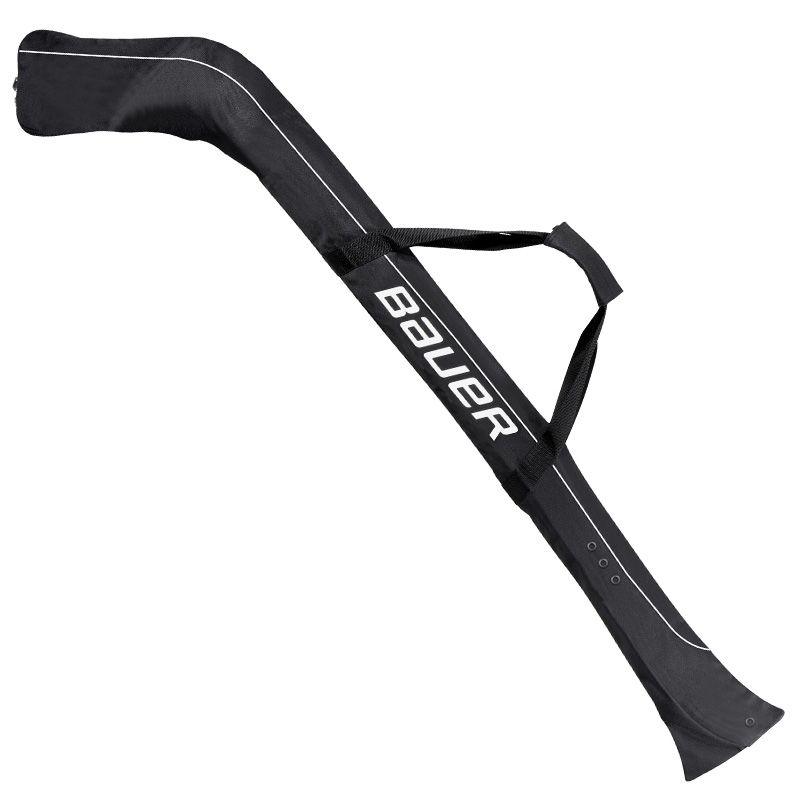
Do not try to make an equipment bag carry full-length sticks. They bend awkwardly through the zipper, catch other gear, and can damage the bag. A player who travels with several sticks needs a purpose-built option. Our guide to hockey stick bags explains the difference between a personal stick carrier and a team travel bag.
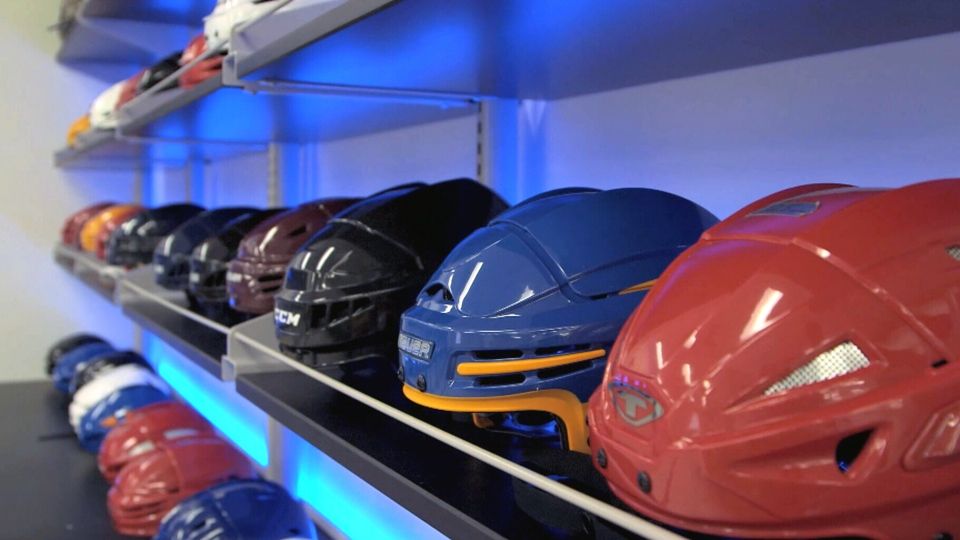
The same logic applies to protective equipment. Your helmet belongs in a bag that lets it fit without squeezing the shell or face protection into a bad shape. A bag cannot compensate for an old or poorly fitting helmet. See our guide to hockey helmets for what to check before bringing one to the rink.
How we evaluated hockey equipment bags
We reviewed current manufacturer information for dimensions, carrying systems, wheel and base construction, ventilation, pocket layout, and the intended player type. We looked for bags that solve specific transportation problems instead of promising one design for everyone. The recommendations are separated by everyday roller use, simple storage, junior mobility, and goalie capacity because those needs are materially different.
We did not treat a premium material or a long feature list as an automatic win. A good hockey bag needs to fit the player’s equipment, route to the rink, and vehicle. It should make drying and packing more orderly. A durable bag that is too large to fit in the trunk is still the wrong purchase.
Questions before buying a hockey equipment bag
Are wheeled hockey bags worth it?
They are worth it if gear regularly travels across a parking lot, a large rink complex, or smooth sidewalks. They are less useful for stairs, broken pavement, or a player who must lift the bag often.
Can a junior player use a senior bag?
Yes, if the equipment fits and an adult handles the loaded bag when necessary. But a much larger bag can be hard for a young player to pull or lift. A junior-specific wheeled bag or backpack is often easier to manage.
How should I clean a hockey bag?
Empty it, shake out loose dirt, wipe surfaces according to the manufacturer’s care instructions, and let it air dry fully before packing it again. The more important habit is drying the equipment outside the bag after every use.
Do goalies need a special bag?
Usually, yes. Goalie pads require much more volume and create a different shape than skater equipment. A goalie-specific carry or wheeled bag makes loading, closing, and storing the equipment far less frustrating.
Buy for your route to the rink
Choose the BAUER Premium Wheeled Bag for most players who roll a full equipment load from the car to the rink. The BAUER Core Wheeled Bag is the sensible choice when one large compartment is enough. The BAUER Elite Wheeled Backpack Junior gives younger players a manageable way to pull or carry gear, while the BAUER Pro Carry Bag Goal gives goalies the volume they need when stairs and vehicle loading make a roller impractical. Then give the gear time to dry. That simple habit protects the bag, the equipment, and the next rink trip.