A handheld vacuum should live where a mess happens and be simple enough to use before the mess spreads. For most homes, the BLACK+DECKER dustbuster AdvancedClean+ HHVK320J10 is the sensible pick. Its extra-long built-in crevice tool, 750 mL bin, washable filter and pre-filter, battery indicator, and 25-minute stated runtime make it useful for crumbs, stairs, car seats, and the space between cushions. The Shark WANDVAC WV201 is better when light weight and a ready-to-grab charging dock matter more than runtime or bin size. For a home already using Ryobi ONE+ batteries, the Ryobi PCL700B powered-brush hand vacuum is the practical specialist for upholstery and embedded dry debris.
Quick picks
| Pick | Best for | Main compromise |
|---|---|---|
| BLACK+DECKER HHVK320J10 | Household crumbs, stairs, cars, and awkward gaps | At 3.3 pounds, it is not the lightest pick |
| Shark WANDVAC WV201 | Fast countertop, sofa, and car touch-ups | An eight-minute stated battery life and 0.1-quart cup limit it to small jobs |
| Ryobi PCL700B | Upholstery or pet-hair cleanup for Ryobi ONE+ owners | It makes poor financial sense if you must buy into a battery platform only for this vacuum |
A hand vacuum is for recovery, not whole-home cleaning
The useful distinction is not corded versus cordless. It is the size of the job. A hand vacuum is right for dry cereal beneath a chair, dirt in a car footwell, hair on a couch, a windowsill, a stair tread, or the crumbs that appear after opening a bag of chips. It is the wrong tool for several rooms of carpet, a deep sofa clean, a renovation pile, or a pet owner trying to remove a week of fur from every rug. For those jobs, a full-size vacuum, stick vacuum, or shop vacuum saves time and battery life.
That boundary makes buying easier. The ideal handheld does not need to replace every cleaner in the house. It needs a nozzle that can reach the mess, a bin that will not fill after one seat cushion, a filter you can clean or replace, a charging arrangement you will maintain, and enough battery for the job you keep postponing. A hand vacuum that is too heavy, hidden in a closet, or tedious to empty will become another drawer object no matter how strong the marketing claims sound.
Dry debris is the default category. Do not pull out an ordinary dry hand vacuum for a spilled drink unless its manufacturer explicitly calls it wet/dry and tells you how to clean it afterward. Moisture can damage electronics, make filters unpleasant, and turn a small cleanup into a maintenance project. A towel or the correct wet/dry machine is the better first response to liquids.
The BLACK+DECKER AdvancedClean+ is the useful default
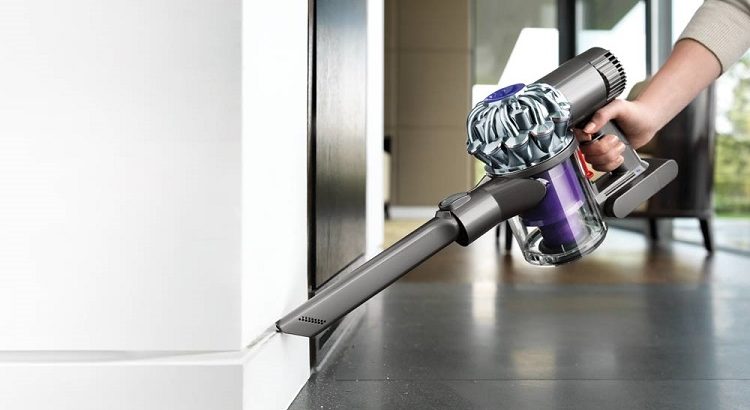
The BLACK+DECKER dustbuster AdvancedClean+ HHVK320J10 is the pick because it is designed around the places a compact vacuum normally fails. Its built-in crevice tool extends far enough for the seam of a car seat, the side of a dryer, or the narrow gap under couch cushions. It also has a flip-up upholstery brush for lint and loose hair. Since the tools are part of the vacuum, there is less chance that a separate attachment disappears into a utility drawer.
BLACK+DECKER lists a 12V MAX lithium-ion system, two speeds including POWERBOOST mode, a 750 mL dust bin, a battery indicator, a washable filter and pre-filter, and up to 25 minutes of runtime. The model weighs 3.3 pounds and comes with a jack-plug charger. Treat the runtime as a useful ceiling rather than a guarantee; the setting, debris, filter condition, and battery age all affect what a real session feels like. Still, the larger bin and longer stated runtime separate it from a miniature countertop picker-upper.
The bin is more important than it first appears. A tiny cup is fine for a teaspoon of crumbs. It becomes annoying when you are doing a car, a stairwell, dry pet food, or the accumulated grit in an entryway. The 750 mL capacity gives this model a chance to complete those jobs without an emptying break. The one-touch empty design is also a practical advantage, though you should still empty it over a trash can slowly. Fine dust has a way of escaping any small bin when it is opened too eagerly.
It is not a carpet cleaner. The non-motorized brush and crevice tool are suited to debris and surface lint, not the deep hair removal a spinning brush can offer. It also has a built-in battery and a specific replacement filter, VLPF10, so check that filter availability where you buy the vacuum. A washable filter needs to be fully dry before it goes back in; using a damp filter creates clumps and can hurt suction. For normal home and car cleanup, those compromises are reasonable.
Choose this model when you want one rechargeable handheld that reaches a varied set of small messes. Check current BLACK+DECKER AdvancedClean+ availability on Amazon.
Choose the Shark WANDVAC for immediate, tiny jobs
The Shark WANDVAC WV201 earns its place by being easy to pick up. Shark lists the handheld at 1.4 pounds, with a high-speed brushless motor, a slim tapered nozzle, a crevice tool, a FurFins pet tool, and a charging dock that holds both accessories. A vacuum that sits in a visible dock close to the kitchen, couch, or car keys is more likely to deal with a small mess immediately than a larger model stored in a closet.
That convenience comes with a hard limit. Shark lists an eight-minute battery life and a 0.1-quart dust cup. The WANDVAC is for a handful of crumbs, a quick pass over a cushion, dry cat litter near the box, or the pocket of a car door. It is not the vacuum to bring out for every floor mat, all the seats in a family vehicle, or a large bag of spilled potting mix. Its very small cup will make that experience tedious.
The FurFins tool gives the Shark a reason to exist in a pet home, especially for the hair that clings to an armchair or small section of carpet. But do not read “pet tool” as a claim that it replaces a full-size vacuum with a powered floor head. Hair length, fabric weave, and how deeply it has been worked into upholstery still matter. The Shark is a fast touch-up tool. It is at its best when you need to remove a small problem before guests arrive, not when you are cleaning the whole sofa after a shedding season.
The dock makes charging painless, but it also gives the vacuum a fixed place. Put it somewhere dry, reachable, and away from a hot cooktop or a route where it can be knocked onto the floor. The fabric filter needs care, and the small bin needs frequent emptying. If those chores feel fussy, buy the larger BLACK+DECKER instead. See current Shark WANDVAC WV201 listings on Amazon.
The Ryobi powered-brush vacuum makes sense inside its battery system
The Ryobi PCL700B 18V ONE+ powered-brush hand vacuum is a specialist choice. Its small motorized beater bar is the useful feature: it is built for upholstery, car seats, and other fabric surfaces where loose debris and hair need more agitation than a plain nozzle can provide. Ryobi also includes LED lighting and sells it as a tool-only item or with a battery-and-charger kit. The right purchase depends on whether you already own compatible ONE+ batteries.
For an existing Ryobi owner, a tool-only hand vacuum can be sensible. You may already have charged batteries, a charger, and an established storage spot. One battery system for a drill, light, blower, and vacuum simplifies the cabinet. Ryobi’s 18V ONE+ platform covers many tools, so the battery has value beyond cleaning. Check the exact kit before ordering: tool-only means exactly that, and battery capacity changes runtime. A small pack makes a hand vacuum light and manageable; a larger pack may run longer but changes the balance in your hand.
For anyone starting from zero, do the total-cost math. A battery, charger, and tool can cost more than a complete stand-alone hand vacuum with its own dock. Do not buy a platform vacuum because the tool-only price looks low. The best reason to choose it is an existing battery ecosystem, a need for the powered brush, or both. The motorized head is useful for fabric but adds another part to clear of hair and thread after use.
The Ryobi is also dry-debris equipment unless the exact version says otherwise. Keep wet messes separate. If a garage or workshop generates gravel, sawdust, or liquid cleanup, a small wet/dry shop vacuum is usually a better tool than forcing an upholstery-focused handheld to do everything. Find the Ryobi PCL700B on Amazon.
Pick a nozzle before you compare a battery claim
For cracks and corners, a long crevice tool is the feature to seek. It cleans beside appliances, inside car-seat seams, in window tracks, and between cushions more effectively than a wide opening. The BLACK+DECKER’s built-in extending tool is convenient because it is always attached. A detachable tool can work just as well, but only if it lives with the vacuum.
For upholstery and animal hair, a motorized mini brush is more useful than a standard dusting brush. It agitates surface hair that a bare nozzle may skim past. It still needs maintenance. Cut nothing away from the roller while the vacuum is operating, and remove wrapped hair only with the machine powered off and according to its manual. A rubber pet tool can be useful for quick fabric cleanup, but it will not solve deep carpet cleaning.
For ordinary dry crumbs, a broad nozzle and a bin you can empty comfortably matter more than another marketing wattage number. Compare the complete geometry of the job: where the debris sits, whether you need reach, whether the surface is fabric, and whether you have to hold the machine above shoulder height. A vacuum that is less powerful on paper can be faster when it comes with the right tool and is charged when you need it.
Battery life and bin capacity change the way you use it
Manufacturers state battery runtime under their own conditions. Treat those minutes as a planning number, not a universal promise. High-power modes, motorized tools, a clogged filter, cold temperatures, and an aging battery can shorten a session. That does not make a short-runtime vacuum bad; it means the WANDVAC is designed for a quick job, while the BLACK+DECKER has more room for a car or several surfaces.
A larger bin is not always better. It usually makes the vacuum larger and heavier. Small bins keep a tool compact but demand a more frequent trip to the trash. Think about the mess you tolerate: a cup of rice, pet kibble, hair, sand, or fine dust all occupy a bin differently. If you empty the vacuum after every short use, a small cup is manageable. If you want to clean the car without stopping, choose a larger one.
Charging is part of performance. A dock near the mess is better than a cable hidden in a drawer. If a model uses a removable tool battery, decide where the spare battery and charger will live before the purchase. Do not leave lithium-ion equipment in a hot vehicle, charge it on a soft combustible surface, or use a damaged battery or cord. Follow the maker’s directions for storage and charging.
Cars, pet hair, and wet spills need different answers
Cars reward reach. Use a crevice tool along seat rails, around the console, between seats, and in door pockets. Start from the high surfaces and work down so you are not redistributing grit onto a cleaned floor mat. A hand vacuum is great for the maintenance passes between detailed car cleanings. It will not replace extracting sand from every carpet fiber or cleaning a large vehicle after a road trip; for the exterior work that follows, see our car-wash soap guide.
Pet hair rewards the right attachment and realistic expectations. A motorized brush or rubber pet tool can make a couch more presentable in a few minutes. It will still need to be cleared. Keep a small brush, the tool’s cleaning comb if supplied, or a dry cloth nearby. The quickest failure mode for a compact vacuum is a filter and brush head packed with hair, then judged as weak when it is simply overdue for cleaning.
For a wet spill, use absorbent towels first unless you own a dedicated wet/dry hand vacuum. The BLACK+DECKER AdvancedClean+ and Shark WANDVAC picks here are dry vacuums. They are not a shortcut for juice, coffee, or a pet-water spill. If liquid cleanup is the main task, choose a model explicitly rated for wet/dry use and learn how to empty and dry it safely.
Keep the vacuum ready instead of buying a stronger one
Empty the bin before it reaches the fill line. Brush or tap loose debris from the filter as the manual directs, and wash only washable filters. Let a washed filter dry completely before reinstalling it. A damp filter holds dust, can smell, and restricts airflow. Replace filters by the correct part number rather than trimming an unrelated material to fit.
Check the crevice tool, nozzle, and brush head when suction changes. A folded tissue, pet-hair plug, or small toy can block a handheld quickly. Turn the vacuum off before inspecting anything. Wipe the exterior with a dry or lightly damp cloth only as the manufacturer permits, and do not submerge the main unit. Simple maintenance is what keeps a compact vacuum useful after the new-product excitement has passed.
It also helps to assign the vacuum a job and a home. Put the BLACK+DECKER near the kitchen or entry, the Shark on a counter or shelf near the couch, or the Ryobi beside the compatible charger. For larger floor messes, a proper full-size cleaner is still the better tool. Our dish-soap guide can help with the separate task of cleaning greasy kitchen surfaces after the crumbs are gone.
How we researched
We compared current manufacturer specifications, included attachments, stated runtimes, bin capacities, charging arrangements, filter types, weights, battery systems, and intended use. We chose models for distinct jobs: a general household tool, a very light grab-and-go vacuum, and a powered-brush option for an existing tool-battery system. We did not conduct a controlled hands-on suction or durability test. Battery life and performance vary with debris, attachment, filter condition, and use mode, so confirm the exact model and included kit before buying.
Handheld vacuum questions, answered
How much runtime do I need?
For crumbs and a sofa, a short runtime can be enough. For cars, stairs, or several rooms of touch-up work, choose a model with a larger bin and a longer stated runtime. The BLACK+DECKER is better suited to those jobs than the eight-minute Shark.
Is a handheld vacuum good for pet hair?
It is good for quick upholstery and seat cleanup when it has a suitable tool. A motorized mini brush has the best chance with embedded hair. A handheld does not replace a full-size vacuum for whole-room carpet cleaning.
Can I use a hand vacuum for liquid spills?
Only if the exact model is explicitly wet/dry. The three recommended models in this guide are for dry debris. Towels are the safe first option for a spill.
Should I choose a model with a removable battery?
Choose one when you already own the compatible platform or need a spare battery. A sealed rechargeable hand vacuum is often simpler when you want an all-in-one tool and dock.
Affiliate note: SuperGrail may earn a commission when you buy through an Amazon link. That does not affect our recommendations or the trade-offs we explain.